About
The person behind the work
I help figure out what we’re building and then I actively help shape it and build it. Most recently: 3x MRR at SellerCrowd with flat headcount, as the senior design partner to the CEO.
Twenty years across architecture, regulated gaming, consumer AI, and B2B SaaS. Led an 8-person UX team at GVC; shipped as core designer at William Hill, Fretello, and SellerCrowd today. I’ve done both; I’ll do either. I love shipping with AI; the proof is the chatbot I built for myself.
In my spare time, you can find me painting miniatures and chairing my local community. Detail-obsessed in every context, apparently.
Full-time IC, director-level, advisory and fractional work
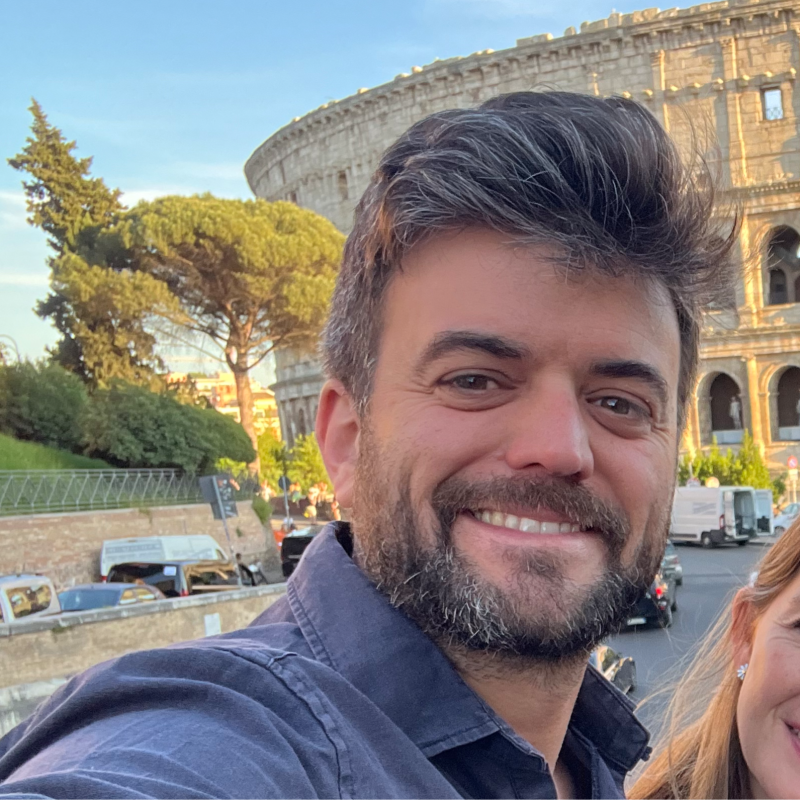 Also known as Albruv
What I do
Twenty years turning ambiguity into products that move numbers.
AI product
Shape an AI capability into a product
Prompts, system logic, UX, making something tangible. The model is half the work, the rest is shaping it into something that holds up under real use.
Albot, the scorer and the digest, in production
Growth systems
Build the loop that makes a product compound
Contribution flows, incentives, pricing, community and data systems. The flywheel so the product gets better the more it’s used.
360 → 23,770 monthly contributions
Design leadership
Senior craft, end to end
Design systems, product storytelling, shipping shoulder to shoulder with founders and engineers. The boring parts and the bright ones.
An 8-person UX team at GVC, one system for about 15 brands
Where I’ve been
Twenty years across architecture, regulated gaming, consumer AI, and B2B SaaS.
Hover the line, or let it play. Real logos from each stop.
Founder
vecinOS
Governance software for homeowner communities. 64 communities, 72 meetings, 10,975 owners so far.
- 2005 · MadridArchitecture, games, freelance


 Graphic design at Abalos & Herreros, then video games and freelance work. Everything you learn when nobody’s watching.
 - 2013 · GibraltarBetVictor · William Hill

 Regulated gaming at scale. Reusable components before they had a name, specs shipped as PDFs.
 - 2016 · GVC · EntainLead UX Designer
 Built an 8-person UX team and one system for about 15 brands. The cashier redesign lifted deposit value 4x.
 - 2018 · FretelloProduct & UX Designer
 An AI guitar coach. Apple put it on the WWDC19 stage. App of the Day in 127 countries.
 - 2021 · SellerCrowdDirector of UX
 Design partner to the CEO. 360 → 23,770 monthly contributions and 3x MRR on flat headcount.
 - 2026 · vecinOSFounderGovernance software for homeowner communities. 64 communities, 72 meetings, 10,975 owners so far.
Partners on Álvaro
Two people who watched me work.
He’s the rare designer who diagnoses the business problem first, the kind of partner any founder needs.
 Clayton GranCEO & Founder, SellerCrowdRead the case
What I remember most, though, is his workshops. They never ended with vague alignment or nice ideas. They ended with real decisions and clear commitments from the team.
 Wolfgang DammCTO & Co-Founder, FretelloRead the case
FAQ
The short answers.
Longer ones live with Albot, in my voice.
Who is Álvaro Velasco?
I’m a senior product designer (also known online as Albruv). Twenty years across architecture, regulated gaming, consumer AI, and B2B SaaS. Currently senior design partner to the CEO at SellerCrowd, where my work helped grow MRR 3x on flat headcount. IC by design.
What’s the difference between Álvaro Velasco and Albruv?
Same person, two names. Álvaro Velasco is on my passport. Albruv is what the British colleagues at GVC started calling me when they couldn’t quite get their tongues around the Spanish Álvaro: first Al, then bruv, and eventually Albruv. The nickname stuck.
What’s your background?
Architecture by training. Then video games, then regulated gambling at GVC (now Entain) and William Hill at FTSE 100 scale. Then consumer AI at Fretello, which became a Sign in with Apple launch partner at Apple’s WWDC19 keynote. Five years now into SellerCrowd, a B2B sellers community.
What outcomes have you delivered?
At SellerCrowd: 3x MRR ($111K → $356K) and 65x growth in monthly contributions (360 → 23,770), on flat headcount over five years. At Fretello: featured in Apple’s WWDC19 keynote as a Sign in with Apple launch partner. At GVC: led an 8-person UX team across regulated gaming products.
What do you do?
I help figure out what teams should build, then actively shape and ship it. The work sits where strategy, UX, AI-assisted prototyping, and engineering meet. My specialties: AI product shaping, growth loops and behavioural systems, and senior craft from first sketch to shipped product.
What kinds of companies do you work with?
AI-native startups, Series A through C, founder-led teams. B2B SaaS, consumer AI, and regulated products where my Entain (GVC) and William Hill experience is leverage. Best fit when there’s an AI capability without a product shape, or a product with traction but a system getting in its own way.
Where are you based?
Estepona, on Spain’s Costa del Sol. Remote-first by preference, comfortable with distributed teams and asynchronous work. Available for travel for kick-offs, workshops, and offsites. Spanish and English fluent; have worked across European, US, and APAC time zones.
Team up
Got a messy, consequential problem?
I’m the designer you put on it when you’re not sure you’re solving the right thing. A short call is usually enough to find out.