Case study 02 · Director of UX · 2021 → now
SellerCrowd
We fixed a real problem. It just wasn’t the one controlling the metric.
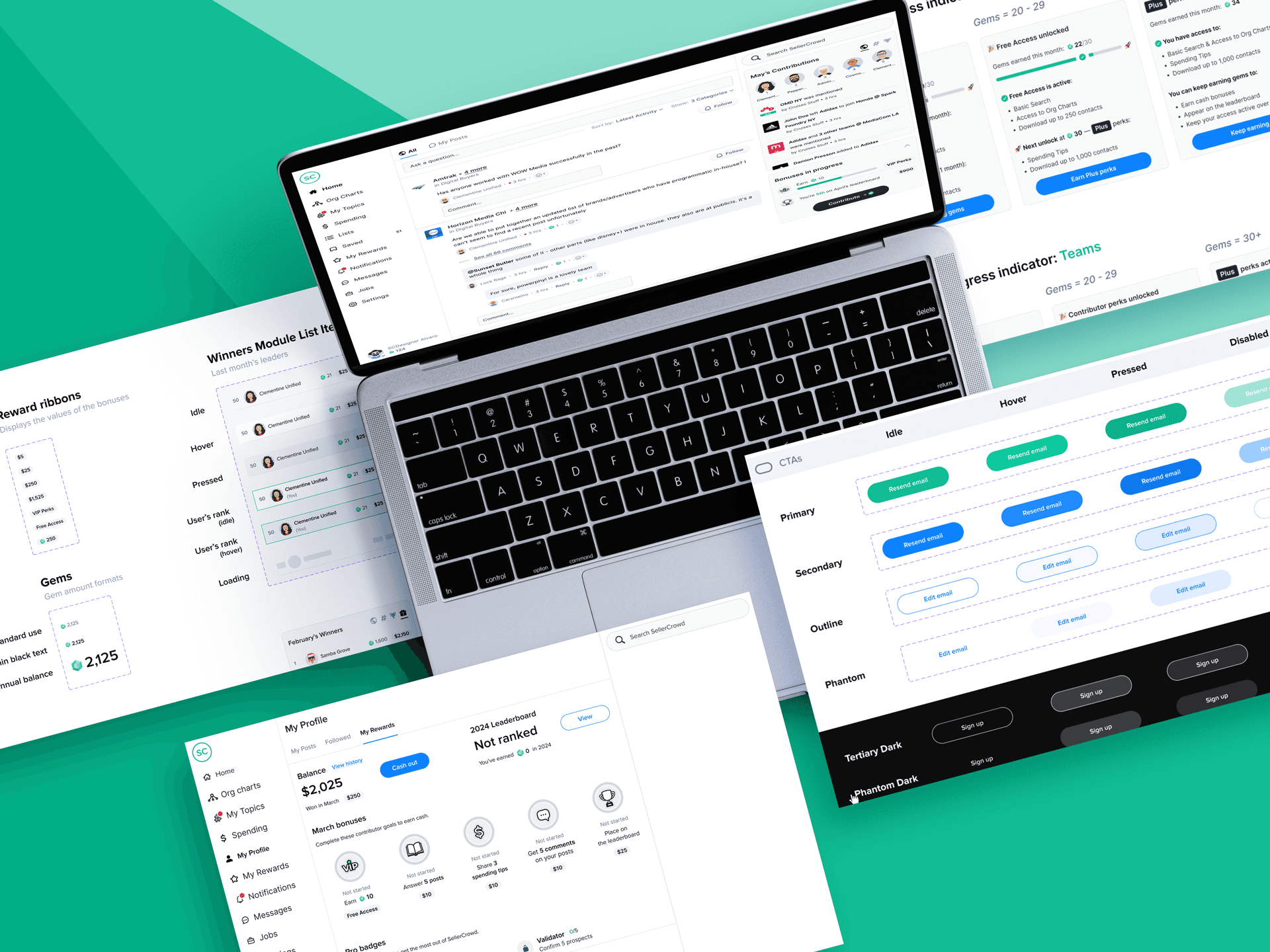
Tokens, components, and patterns. Six months on the foundation before touching the engine.
- monthly contributions, from 360 to 23,770
- 65x
- 2021 → now
- MRR, from $111K to $356K
- 3x
- Five years
- new headcount to get there
- 0
- Flat team
- behavioural levers shipped in sequence
- 7
- Not gamification
In short
Álvaro Velasco served as Director of UX and senior design partner to the CEO at SellerCrowd across five years (2021 → now), helping grow MRR 3x ($111K to $356K) and monthly contributions 65x (360 to 23,770) on flat headcount. The work covered product diagnosis, contribution flows, reward mechanics, the design system and pricing strategy in a B2B sellers community.
01 · The system
A community where the data is the product.
SellerCrowd is the largest media sales community in the USA. Sales professionals share intel, who’s buying, which budgets, which campaigns are live, and pay for access to what the community knows. Every insight is contributed by a member.
When I joined, the business had stalled: flat community, flat revenue, flat contribution.
02 · Assumption
Fix the structure and activity will follow.
The product had grown organically and lacked coherence. It looked like an interface problem, so I treated it like one.
03 · Evidence
Research agreed with me.
User research confirmed serious information-architecture problems. The case for restructuring the experience, on the design system the product was missing, was strong.
04 · Decision
I persuaded leadership to invest in it.
It was my call to push for. Leadership backed it and we rebuilt the experience on a new design system. The product became coherent: easier to navigate, easier to build on.
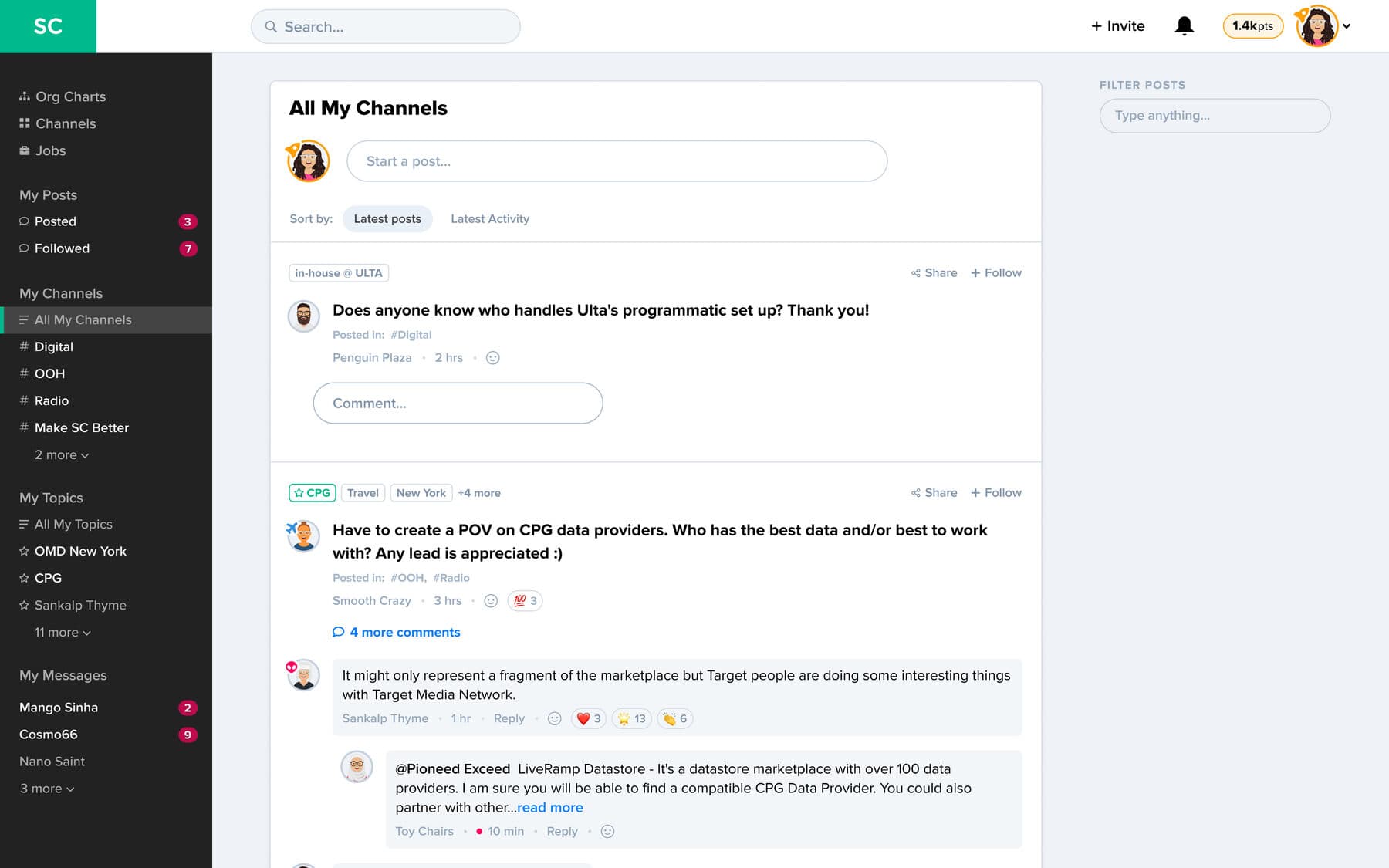
SellerCrowd product in July 2021.
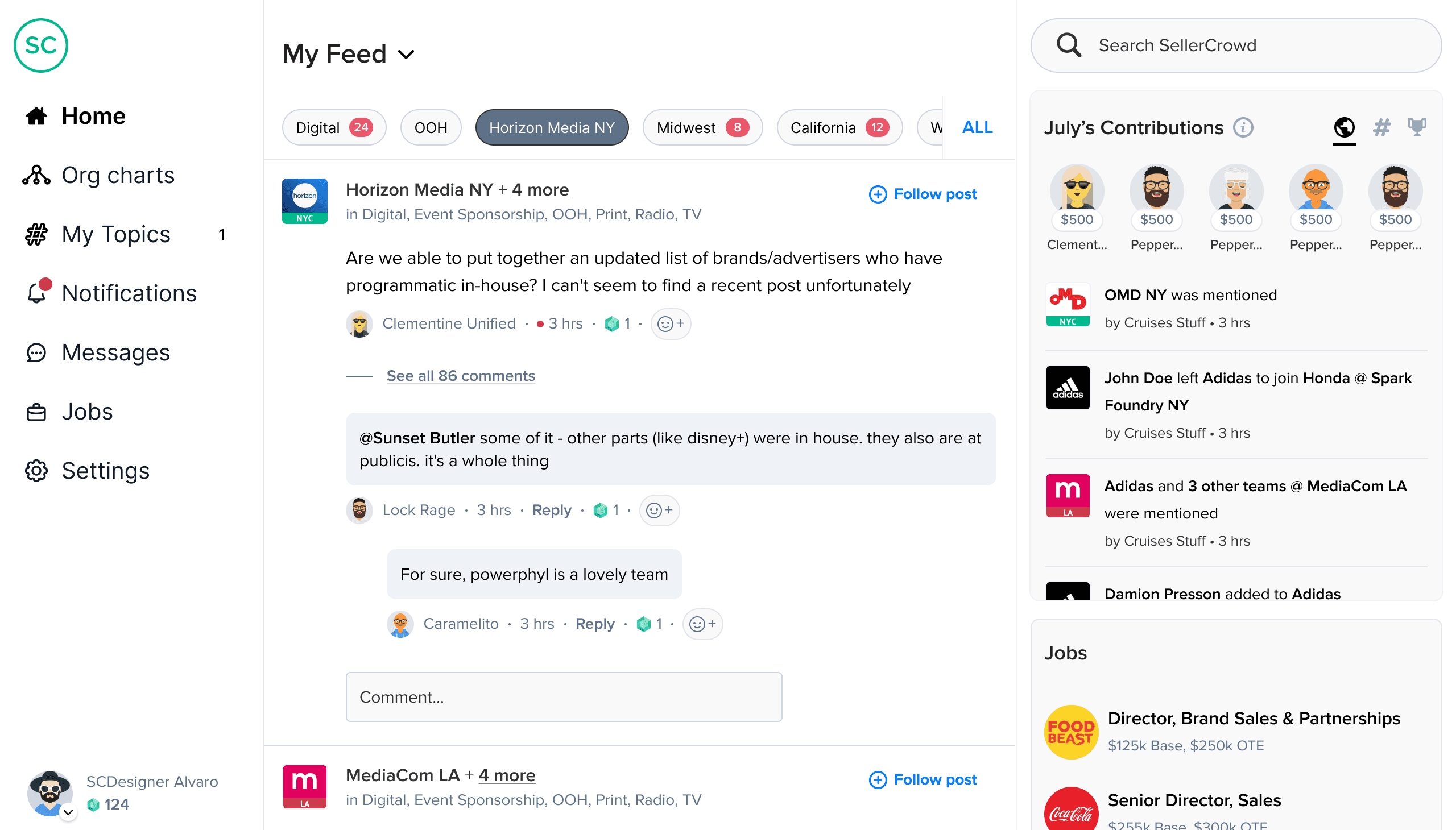
SellerCrowd product in January 2022.
05 · Surprise
Activity stayed flat. For months.
By every UX measure the redesign worked. The metric that mattered didn’t move. I had led the organisation into that decision, and I felt the consequences.
Instead of defending the redesign, we measured what happened and kept digging: what makes someone contribute valuable information, again and again?
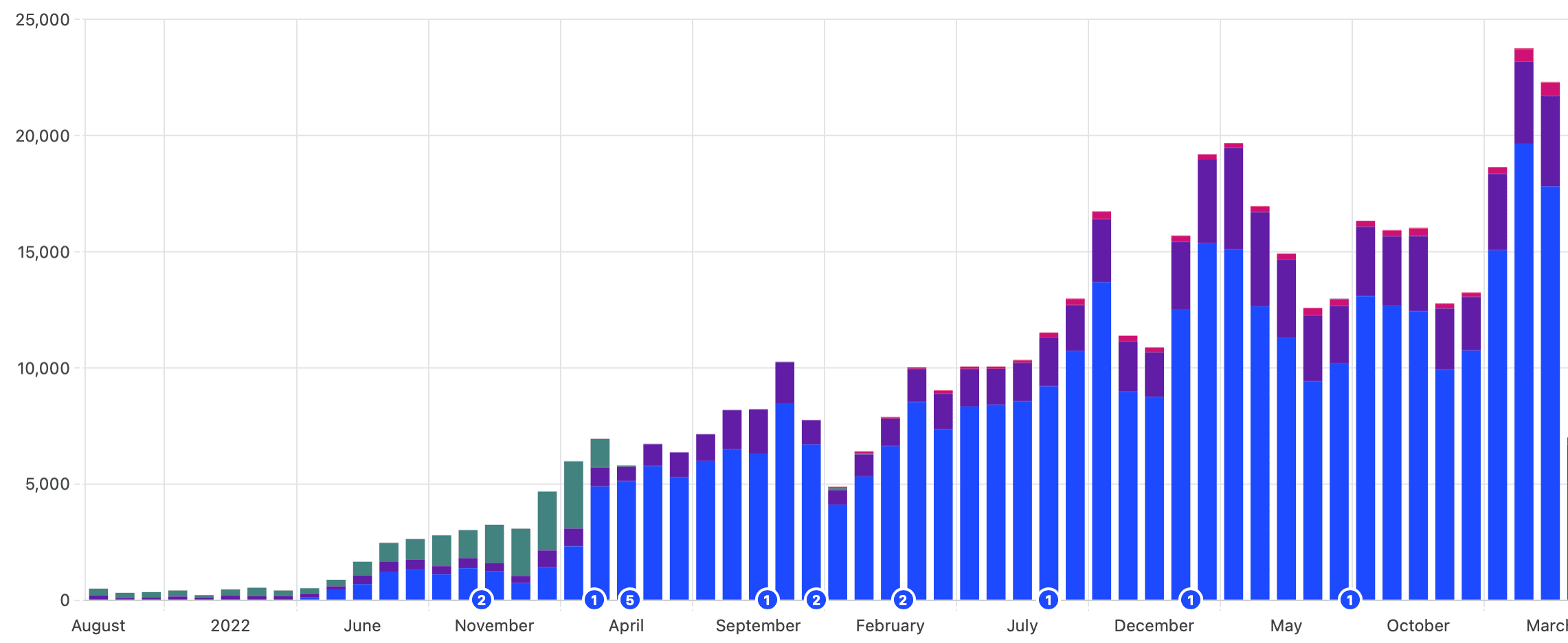
Monthly contributions, August 2021 to March 2026.
The diagnosis
Invisible contribution.
A workshop in Barcelona surfaced three causes: contribution paths were hard to discover, contributing had too much friction, and contributors got no signal that their input mattered.
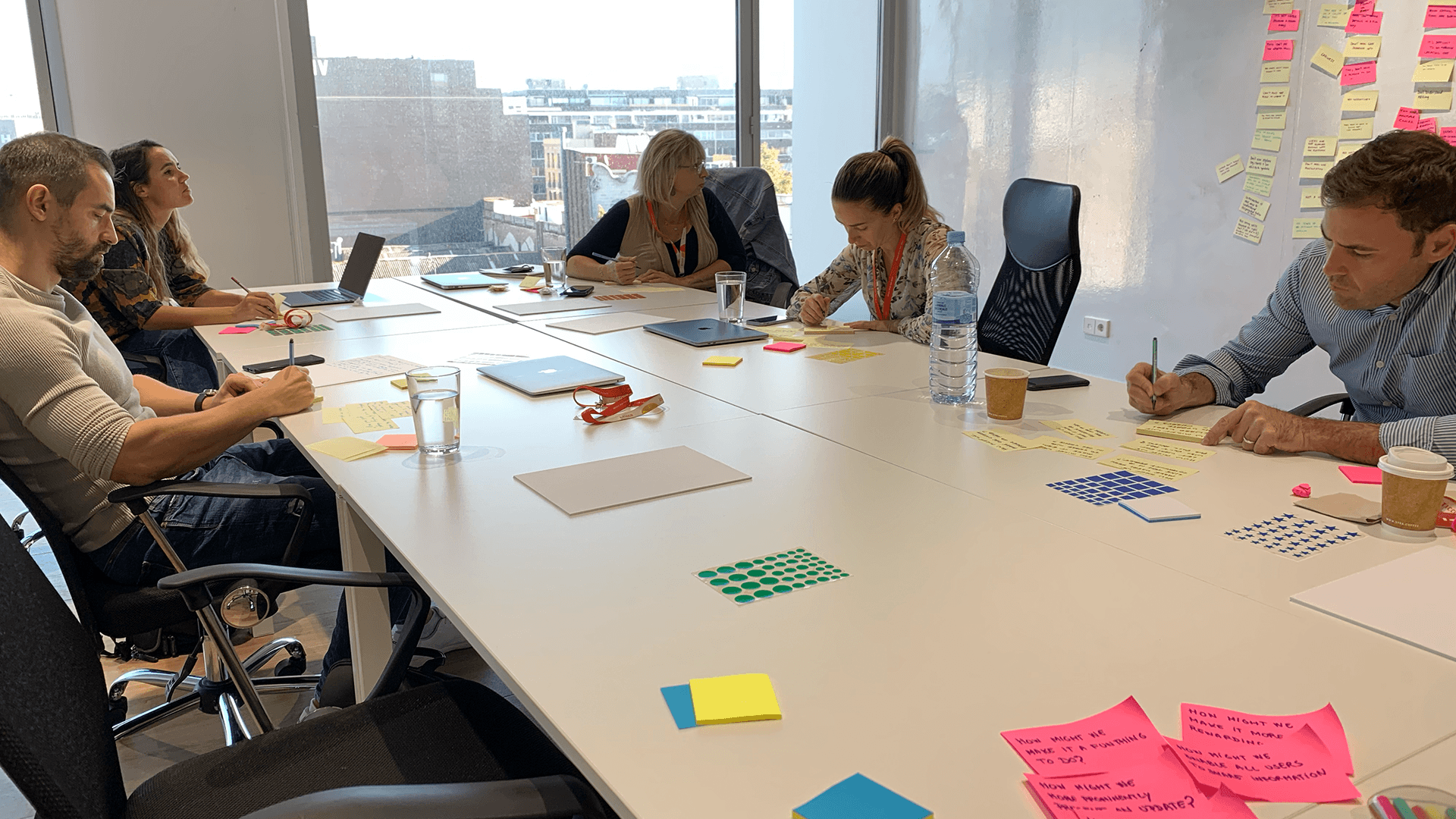
Workshops with Clay and the leadership team in Barcelona, 2021. Diagnose first, ship second.
06 · Adjustment
Behavioural design, not gamification.
We shipped in sequence: a single-field contribution primitive people could use in their own words, open fields wherever members already were, Gems as the opening hook, VIP status that unlocked free access, a six-beat email sequence, published contribution guidelines and one-click contribution.
Monthly contributions went from 360 to 23,770. MRR went from $111K to $356K, on flat headcount.
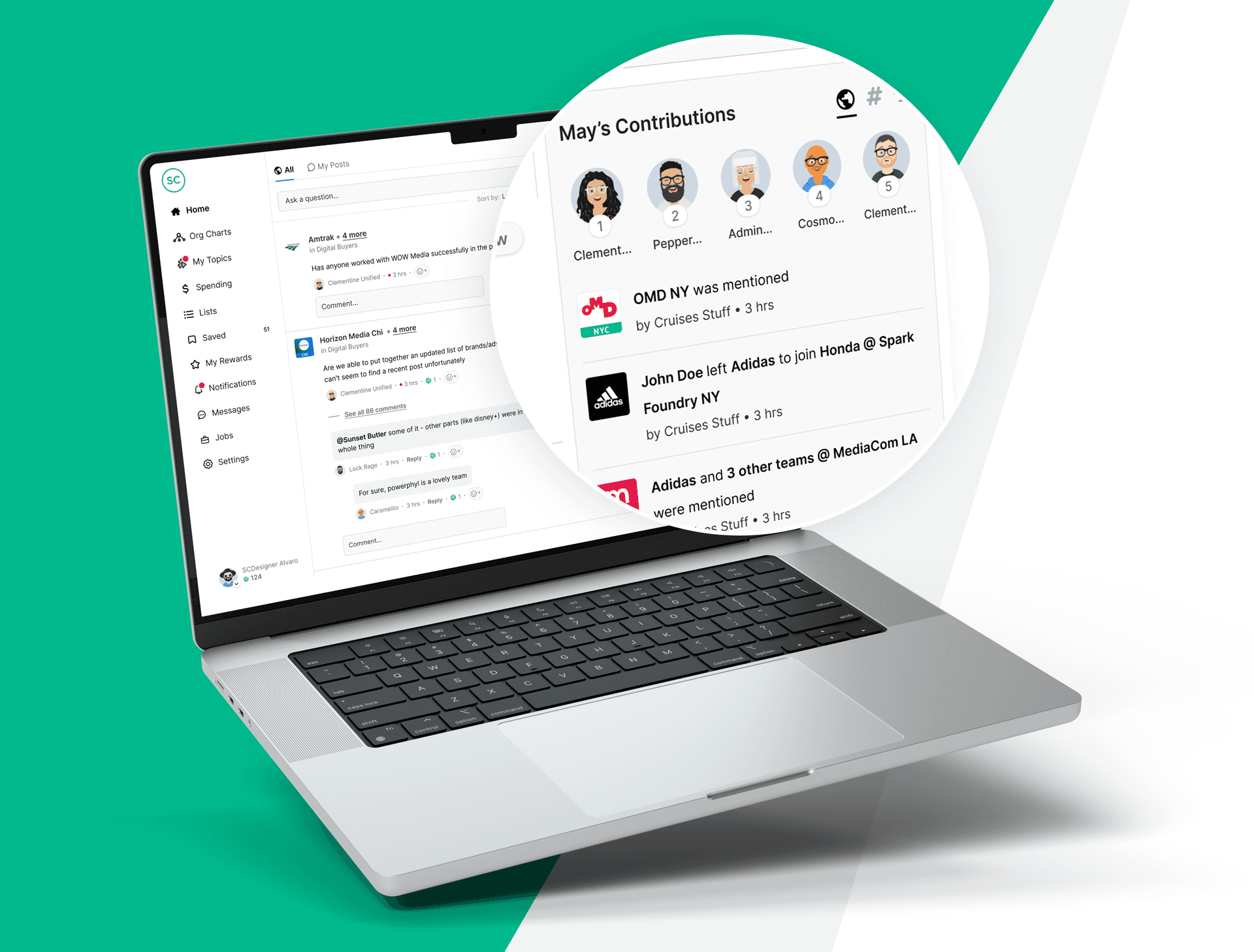
The form per page disappeared; a single open field replaced it, surfaced wherever sellers were already working.
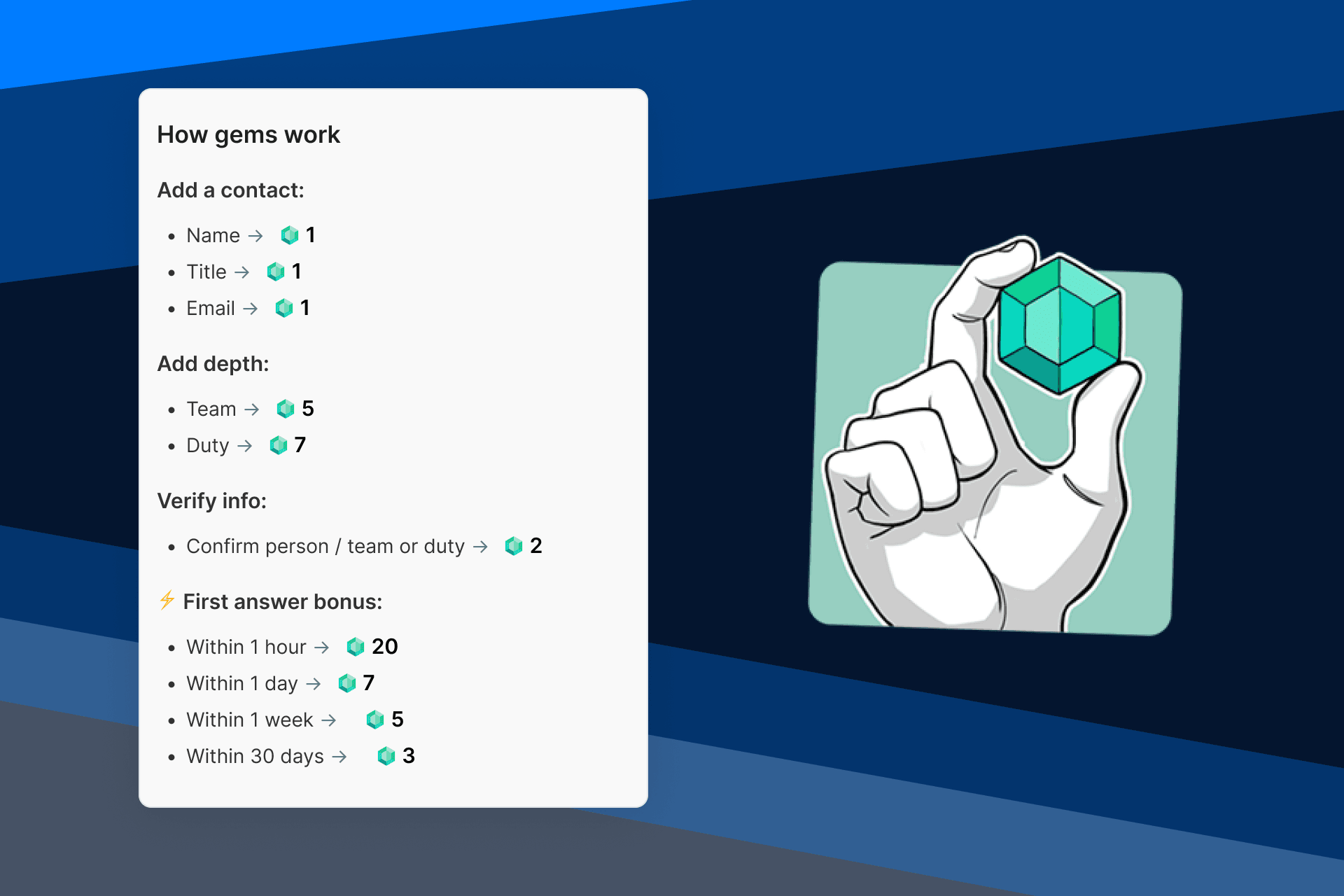
The depth-weighted gem economy. Bare contact: a few gems. Role and patch: more. Full intel write-up: the most.
Contribution mechanics
Making contributions visible
Second, contributions got visible. We built a module on the feed’s right rail called NIOC (New in Org Charts) and placed it front and centre. Monthly cadence, monthly reset, monthly leaderboard. Your post showed up where your peers saw it. Contribution turned into status.
Third, gems and VIPs. Gems are a virtual currency earned for every meaningful contribution. Earn ten in a month and you became a VIP, which unlocked SellerCrowd itself for free. The prize wasn’t the gems. The prize was the access. Gems were how you tracked your way to it. A six-beat email sequence kept contributors on the path: invite, mid-month nudge, last-week push, last-two-days reminder, “way to go” or “you lost your seat” with a clear path back.
The logic under all three moves: sellers will contribute if the site tells them it noticed.
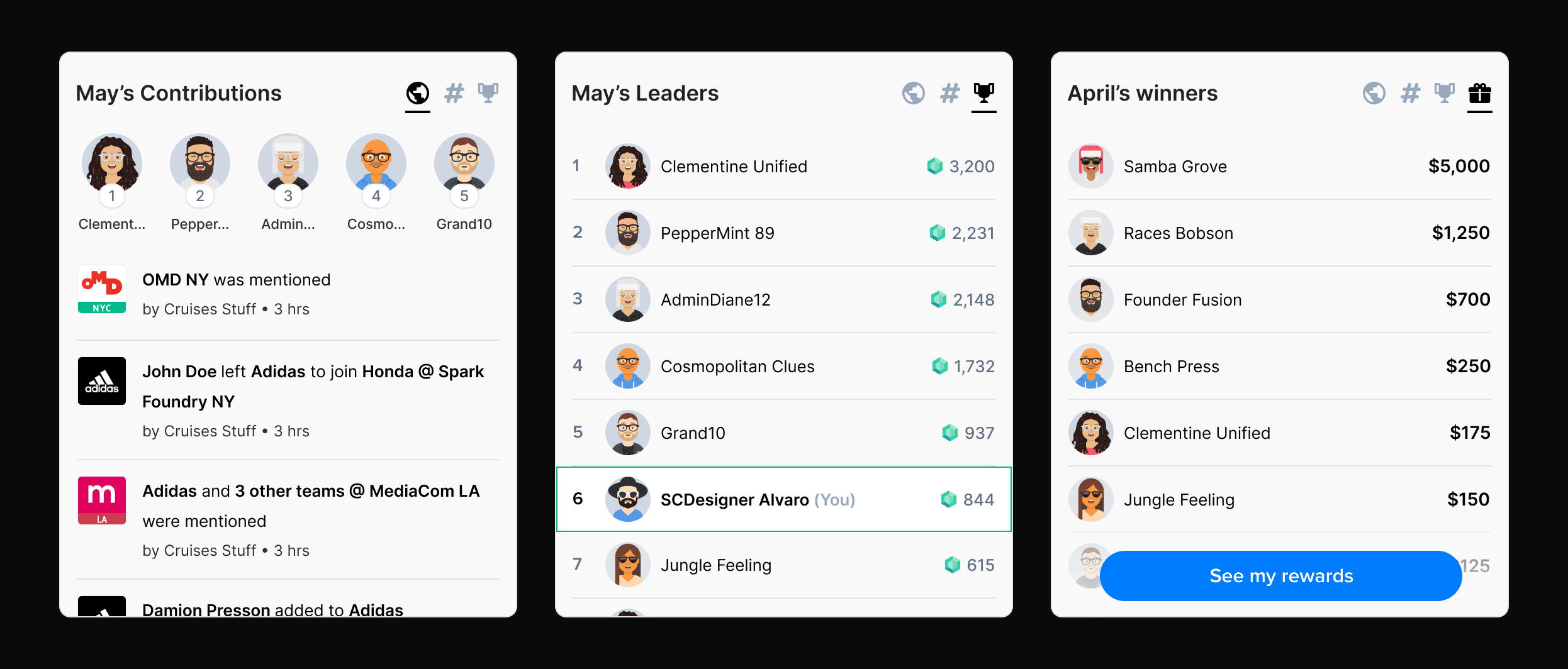
NIOC on the right rail. Monthly cadence, monthly leaderboard. The module contributors check first thing in the morning.
Contribution quality
Behaviour into data
With the new contribution paths live, volume went up. So did a new problem: low-context posts. People started dropping bare emails, a name on its own, a title without a company, all claiming credit for the gems attached. The system was rewarding quantity without noticing quality.
I proposed reworking the gem economy around insight depth. The deeper the insight, the more gems. A contact name on its own earned a small reward. Context about the role, the patch, the buying pattern earned more. A full intel write-up earned the most. We wrote this into a set of Contribution Guidelines, published them to the community, and rebuilt the gem payouts underneath. Abuse dropped. Quality went up.

A bare-email post claiming credit. Quantity without quality, gaming the gem layer.
The pricing loop
Pricing and contribution
By 2023 the data had grown enough to justify a price move. Three things went live together: the depth-weighted gem economy, our first monthly price increase from $19 to $37 (we also renamed the plan from Individual to Pro), and a new monetary reward layer on the leaderboard. The community got an email explaining why: part of the proceeds were going straight back to the contributors keeping the product alive. Sellers saw the price go up. Sellers saw the site pay its best contributors. Contributions jumped, revenue jumped, and the price-goes-up-people-leave reflex never showed up.
Alongside that, I proposed dropping the flat-rate enterprise model. A team of 20 and a team of 200 had been paying roughly the same deal. We moved enterprise to per-seat: easier to explain because it was fairer, bigger teams paid for more seats, expansion inside existing accounts became a lever we hadn’t really had before.
One more move closed out 2024: one-click contributions for the high-frequency post types. “Person left the team.” “Team moved to a different agency.” “Person joined a new agency.” All used to be free-text posts. We built one-click actions for each common pattern. Tap, confirm, the post is live.
Contributions tripled.
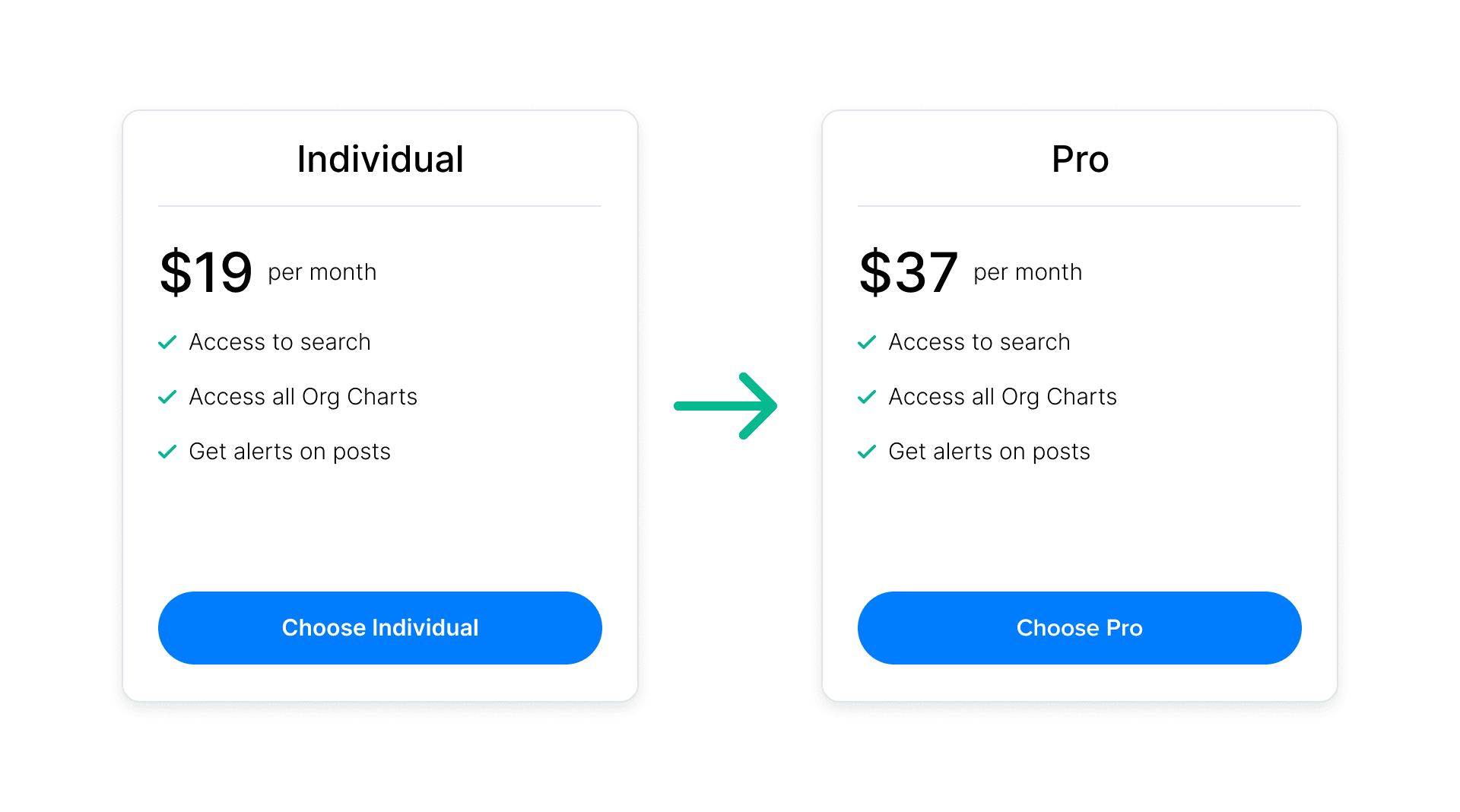
The first price move. From $19 to $37, paired with the depth-weighted gem economy and the new monetary reward layer.
The pricing decision
The $47 call, and what 2025 confirmed
Heading into 2024, contributions had grown 2.5x since the first price move. My position was straightforward: match the price to the value of the data, go to $67 a month, hold there through 2025 to give users space. Clay wanted to be more conservative. We landed on $47, and introduced a Plus tier at $137 with deeper benefits for heavier users.
2025 turned out to be the A/B test we hadn’t planned on running. We raised the standard plan from $47 to $67, the same number I’d argued for a year earlier, and no complaints came back. Nobody cancelled. Nobody pushed back.
About one million dollars of cash the business didn’t collect in 2024. I’m telling you about it because it’s the honest lesson in this story, not the victory lap. The right price argument still has to land inside the team’s conviction, and in 2024 we chose the safer number together. What 2025 taught us is that when the flywheel is running and the data’s telling you the market has room, caution is quietly the more expensive call.
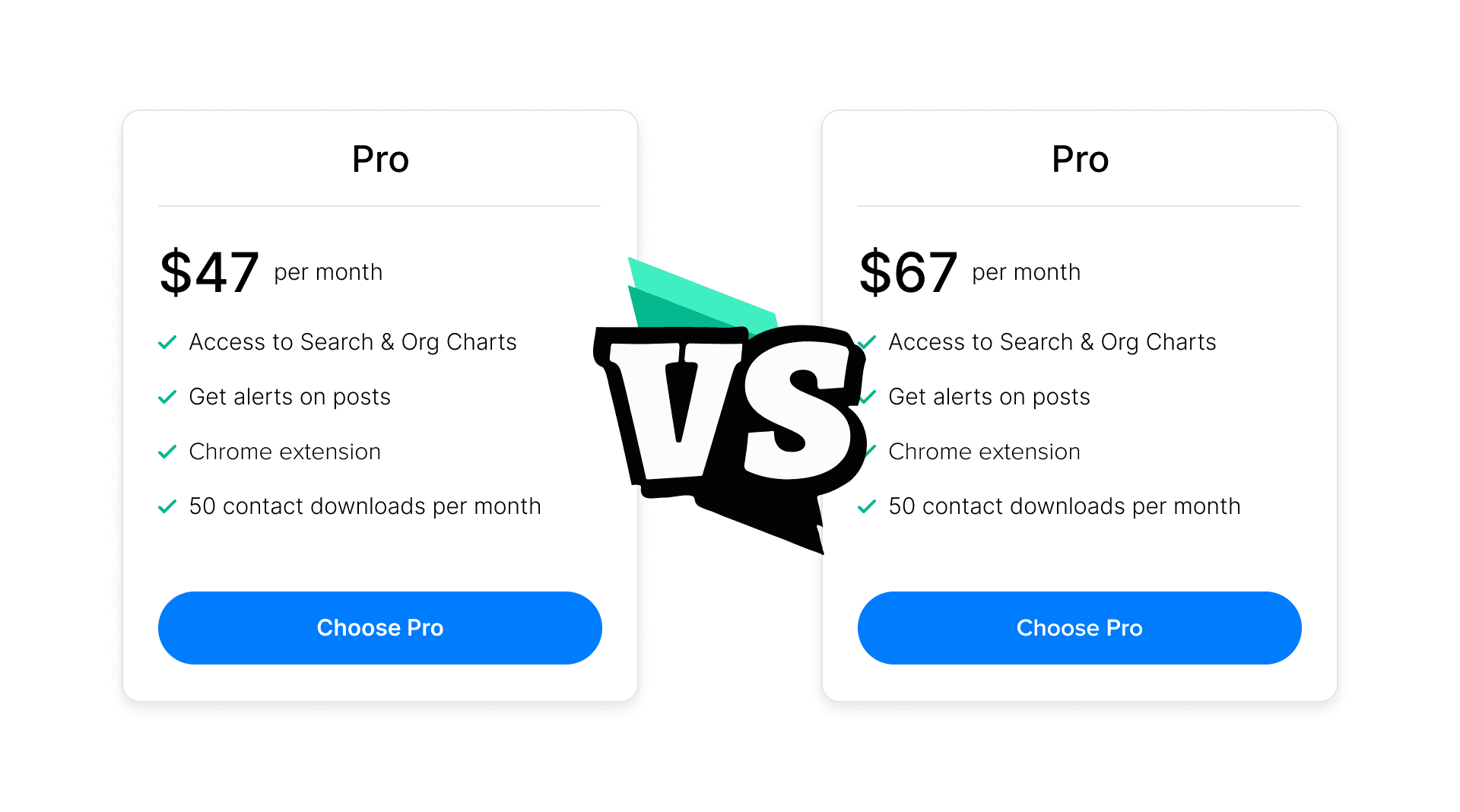
A year apart. The conservative move first, then the price I’d argued for. Both held.
We fixed a real problem. It just wasn’t the problem controlling the metric.
07 · The team
The team got better at designing without me.
When I joined, design belonged to the designer. By pulling engineers and teammates into unfinished thinking, critique and product decisions, design became something the team practised.
Teammates who used to avoid UX started proposing and prototyping their own solutions.
How I work
What this says about how I work
Design as business diagnosis. The brief never said “redesign the contribution form.” It said “we’re flat.” Getting from flat to triple MRR meant diagnosing what the product actually was, the data, not the community, and designing the engine that made the data come in.
Behavioural design, never gamification. The VIP loop, the leaderboard, and the gem economy aren’t points-and-badges on top of a product. They’re the mechanism the product uses to translate user behaviour into data the business can sell. Structural claim, not a cosmetic one.
Workshops that end in commitments. The Barcelona 2021 workshops weren’t the only time. We ran this play several times across the five years. Everyone in the same room, diagnose honestly, pick the priorities, leave with a plan that actually ships. Workshops that end in moodboards are cheap. Workshops that end in shipping dates move the business.
He’s the rare designer who diagnoses the business problem first, the kind of partner any founder needs.

CEO & Founder, SellerCrowd