Case study 01 · Founder · 2026 → now
vecinOS
Moving the meeting upstream. How a lost proxy vote turned into a lesson in governance, trust and legitimacy.
- annual meeting, down from 9 hours the year before
- 3h 26m
- July 2026
- of the coefficient decided before the doors opened
- 60.2%
- Best with a full room: 48%
- owner questions answered before the meeting
- 24
- Plus 50 assistant chats
- votes cast to keep using vecinOS
- 76 / 76
- Of the owners who voted on it
In short
Álvaro Velasco founded vecinOS in 2026: governance software for homeowner communities in Spain. Owners read, listen, ask and vote in their own language before the annual meeting. In July 2026 a 165-owner community walked in with 60.2% of the coefficient already decided, and the meeting took 3 hours 26 minutes instead of 9 hours.
01 · The system
One evening carried the whole system.
A community of 165 owners, spread across several countries and four languages. Each owner holds a share of every decision, their coefficient. The decisions are financial and legal, and many owners can never attend.
Information, questions, debate, proxy votes and the decision itself all converged on one annual meeting. The year before, it lasted nine hours.
02 · Assumption
I thought I was fixing a meeting.
The trigger was simple: proxy votes got lost. So the first brief I gave myself was to digitise the vote, faster and without paper.
That would have produced a decent voting app. It would not have changed much.
03 · Evidence
The meeting was where the system failed in public.
Questions surfaced for the first time in the room. Errors in proposals were found in the room. Owners who couldn’t travel had no voice but a proxy that might never arrive.
The meeting wasn’t the problem. It was where every failure upstream became visible at once.
04 · Decision
Move the meeting upstream.
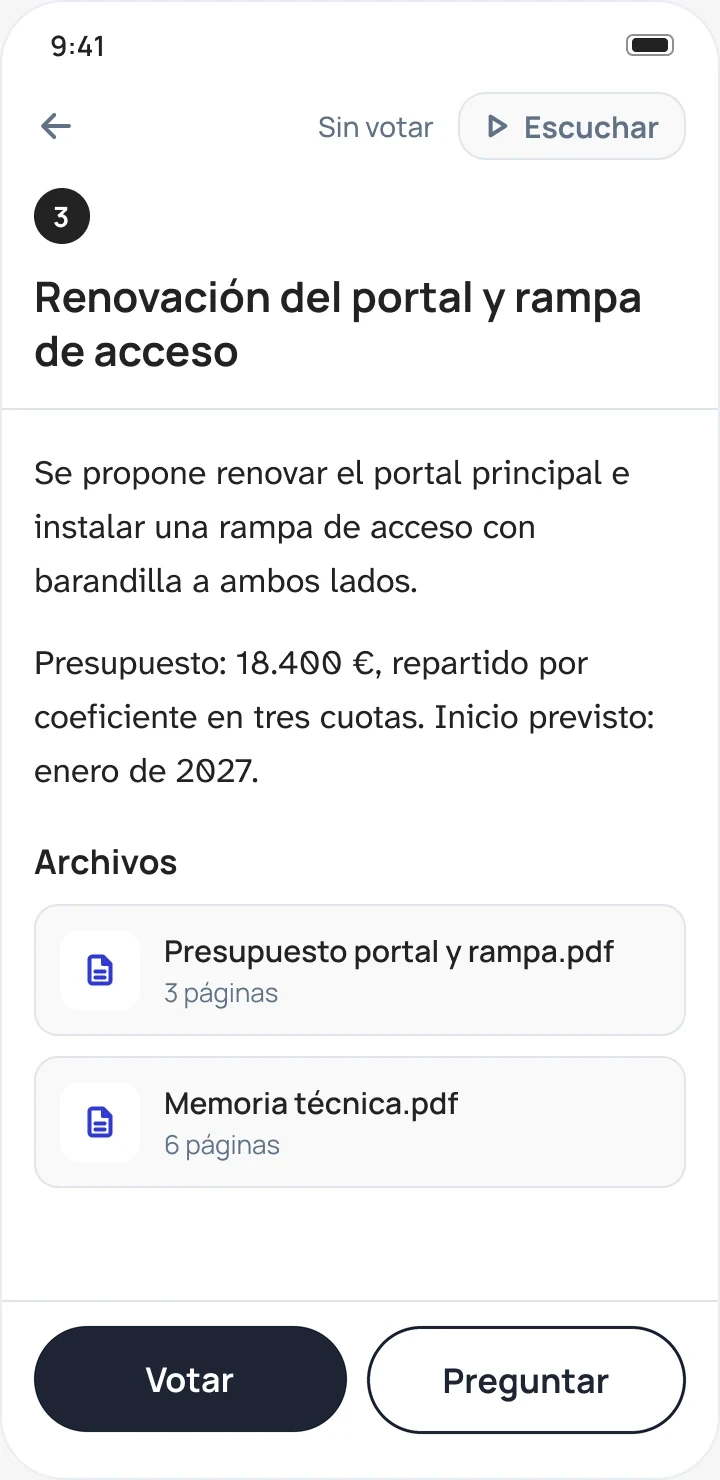
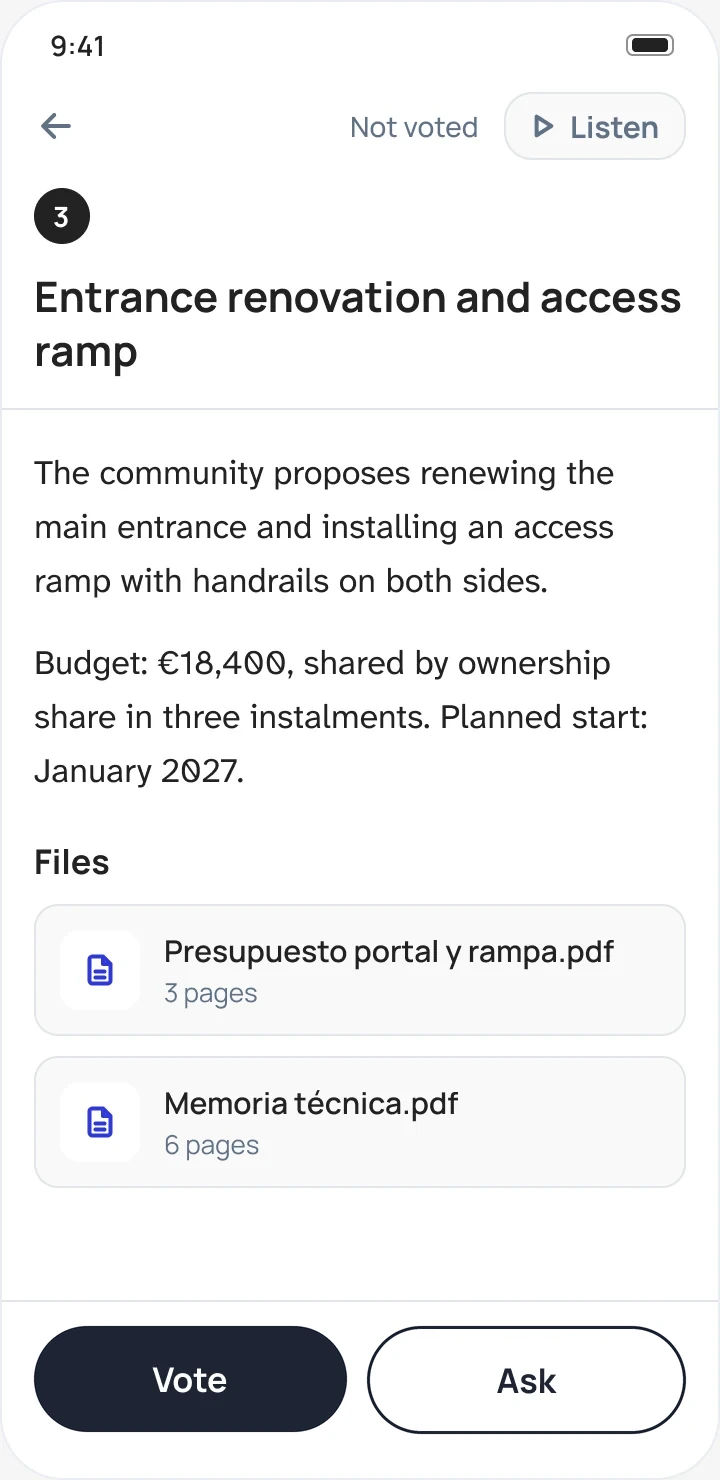
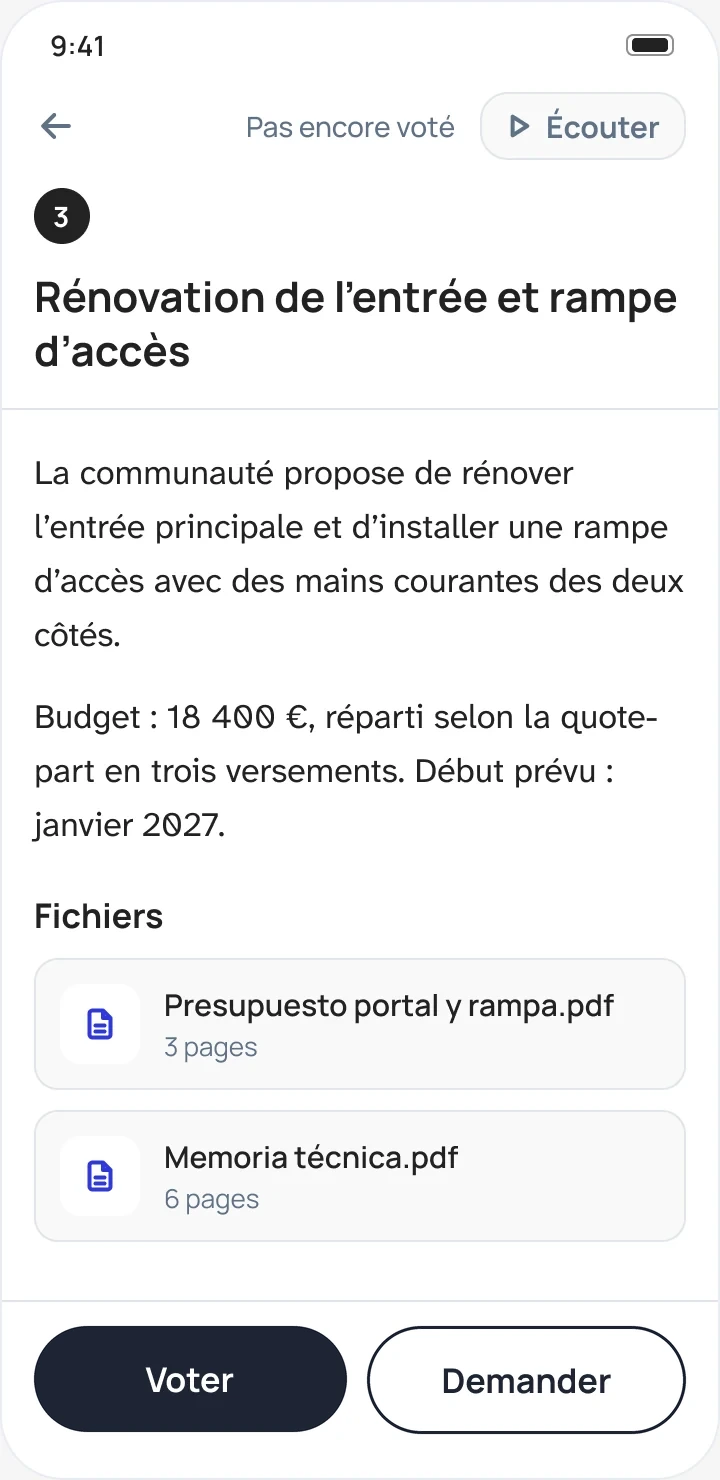
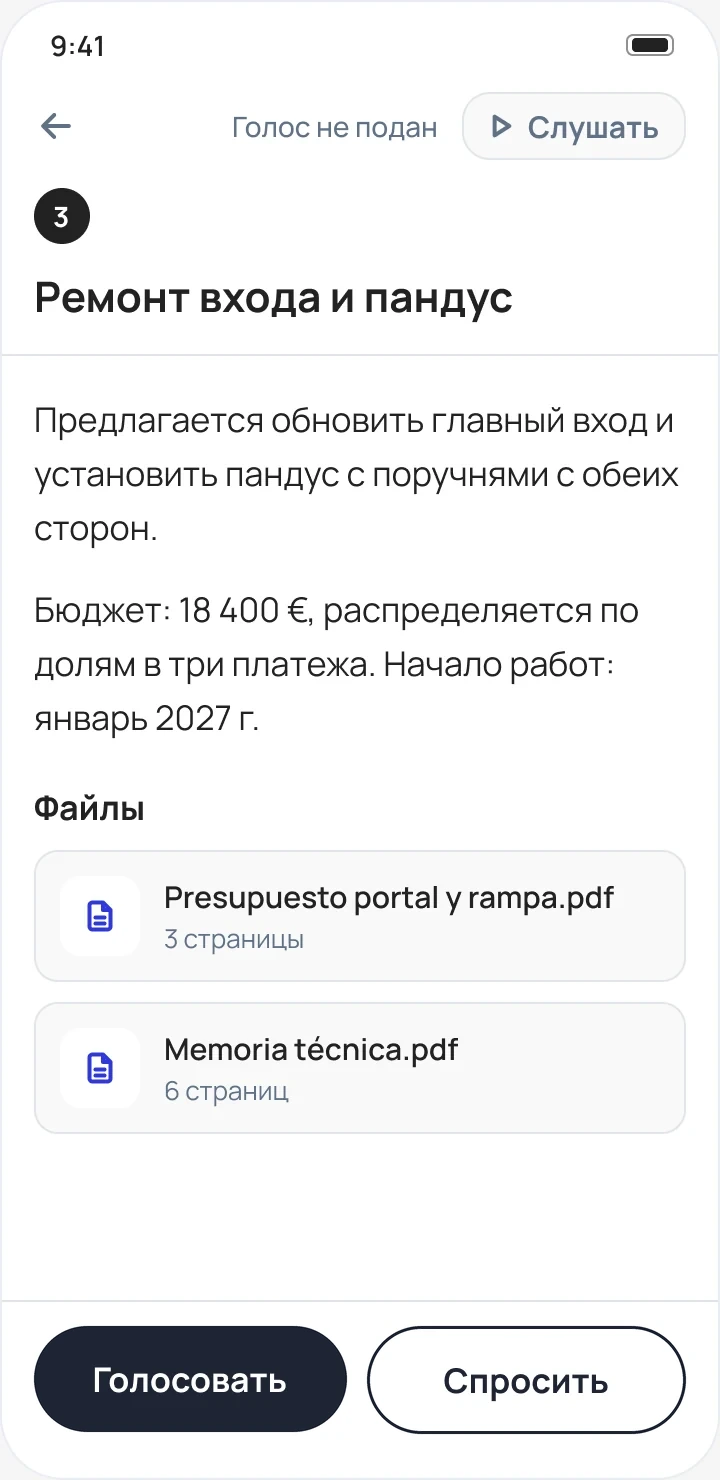
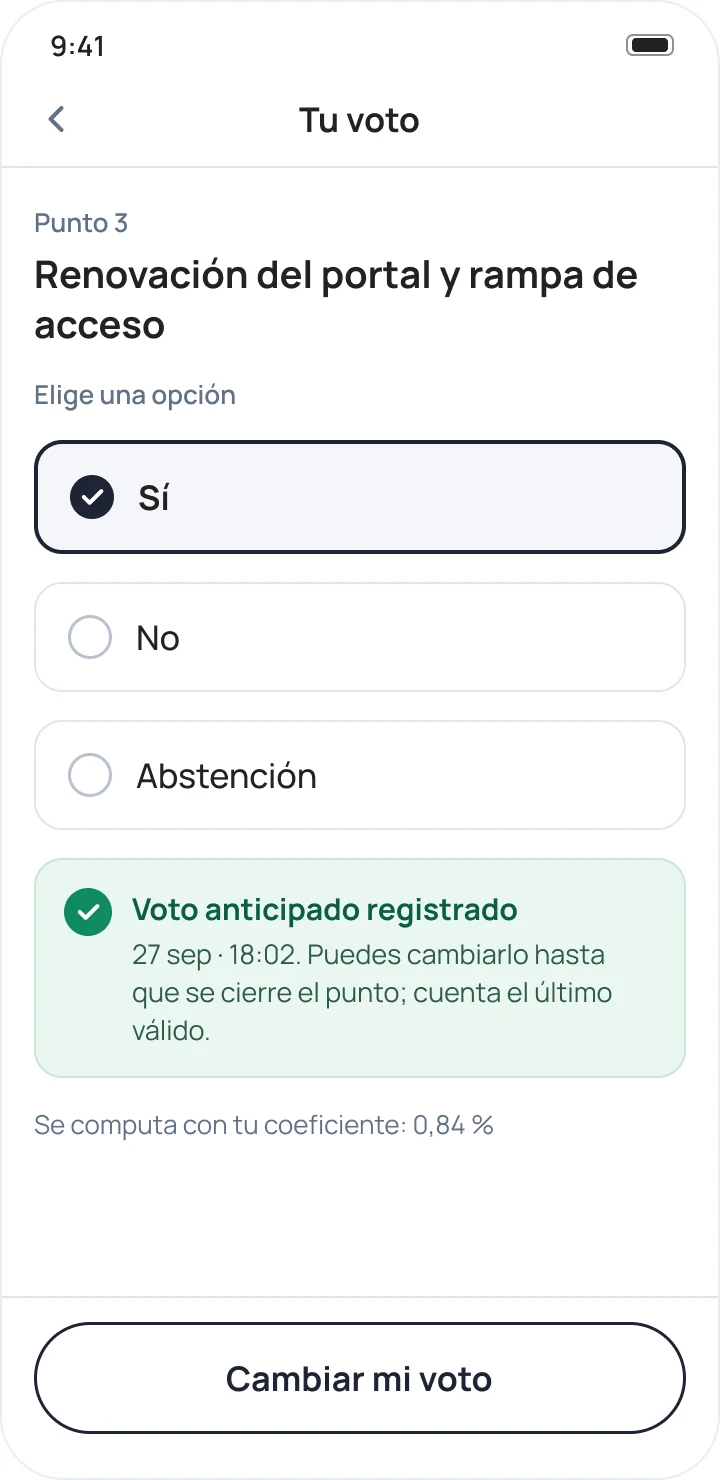
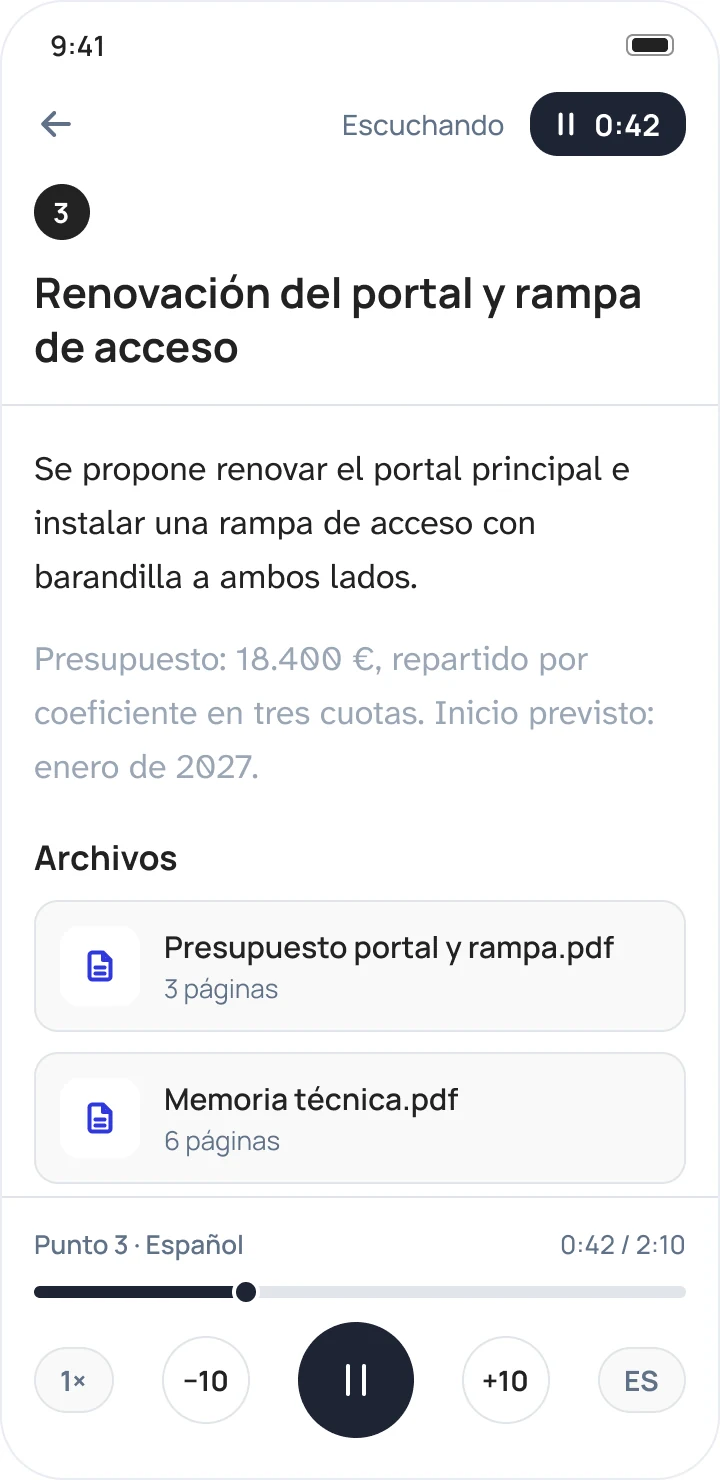
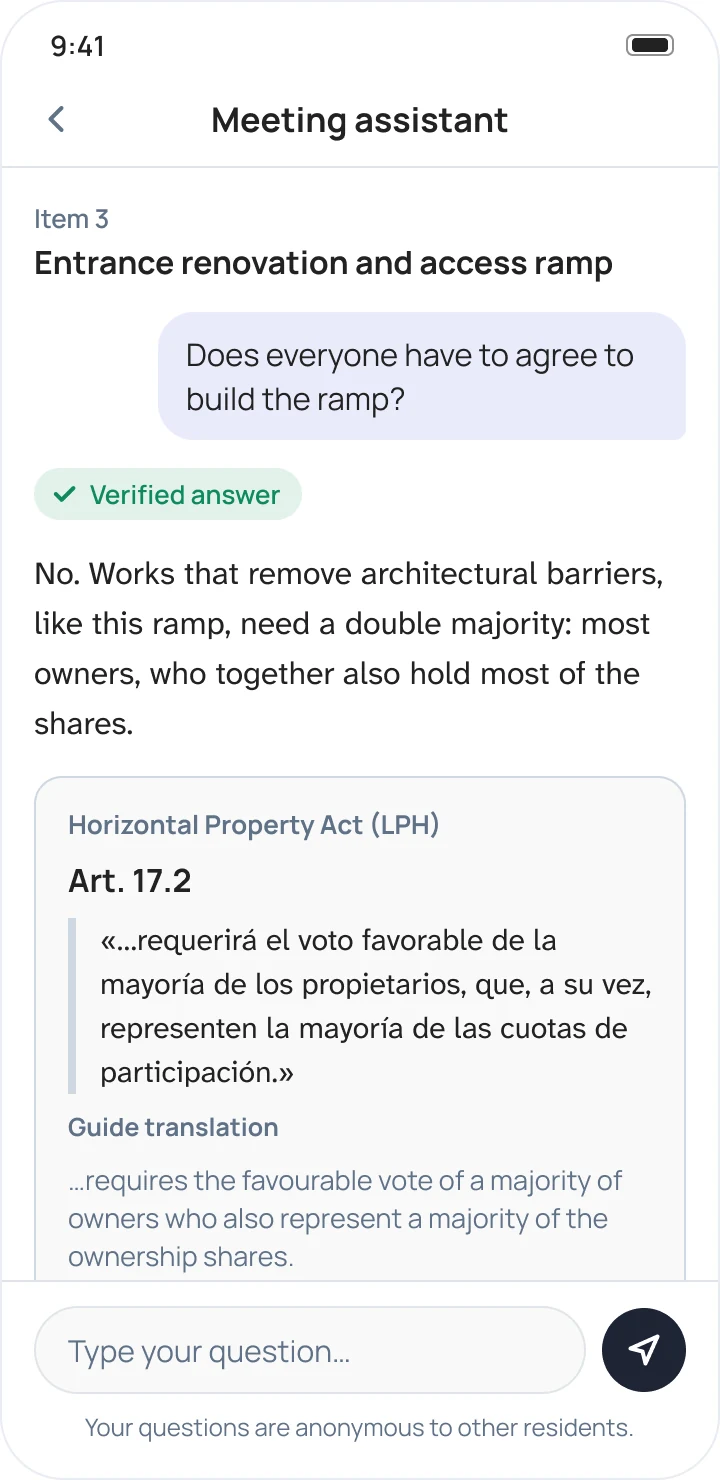
Each item gets its proposal, documents and an explanation, prepared once and delivered to every owner in their own language, with audio. Owners ask before they vote, and the administration answers before the room opens.
Owners can vote in advance and change their vote until the item closes. In the room, a pre-vote arrives as a written representation under article 15.1 of Spain’s Horizontal Property Law, checked by the administration.
05 · Result
3 hours 26 minutes instead of 9.
75 owners decided before the doors opened: 60.2% of the coefficient, against a historic best of 48% with the room full. 24 questions were answered in advance and the assistant held 50 conversations.
Participation stopped depending on being in the room.
06 · Surprise
Reality broke my model.
The minutes engine assumed a meeting runs in order: discuss an item, close it, timestamp it, move on.
Real meetings don’t. People revisited items. Records turned out to be wrong. Eligibility changed when an administrative mistake surfaced. The legal reading shifted mid-debate. I had designed around the formal process, not around the exceptions that define the real one.
The lesson
Design for the exceptions, not the flowchart.
The product now tolerates reality breaking its model: items can reopen, records can be corrected, and minutes carry versions and rectifications.
07 · Adjustment
Technology wasn’t the strongest adoption mechanism. Trust was.
A trusted president’s message did more for adoption than anything I shipped. So vecinOS supports community leadership instead of trying to automate it away.
Products don’t always replace human systems. The best ones amplify them.
Success was not unanimity. Success was legitimate participation.
08 · How it’s built
One founder, a team of agents, a human eye.
Every plan is interrogated before any code exists. Agents implement against it, a second model reviews the work adversarially, and I review every screen by hand before production.
AI shortened the distance between judgment and working software. It didn’t replace the judgment.