Where I walked in
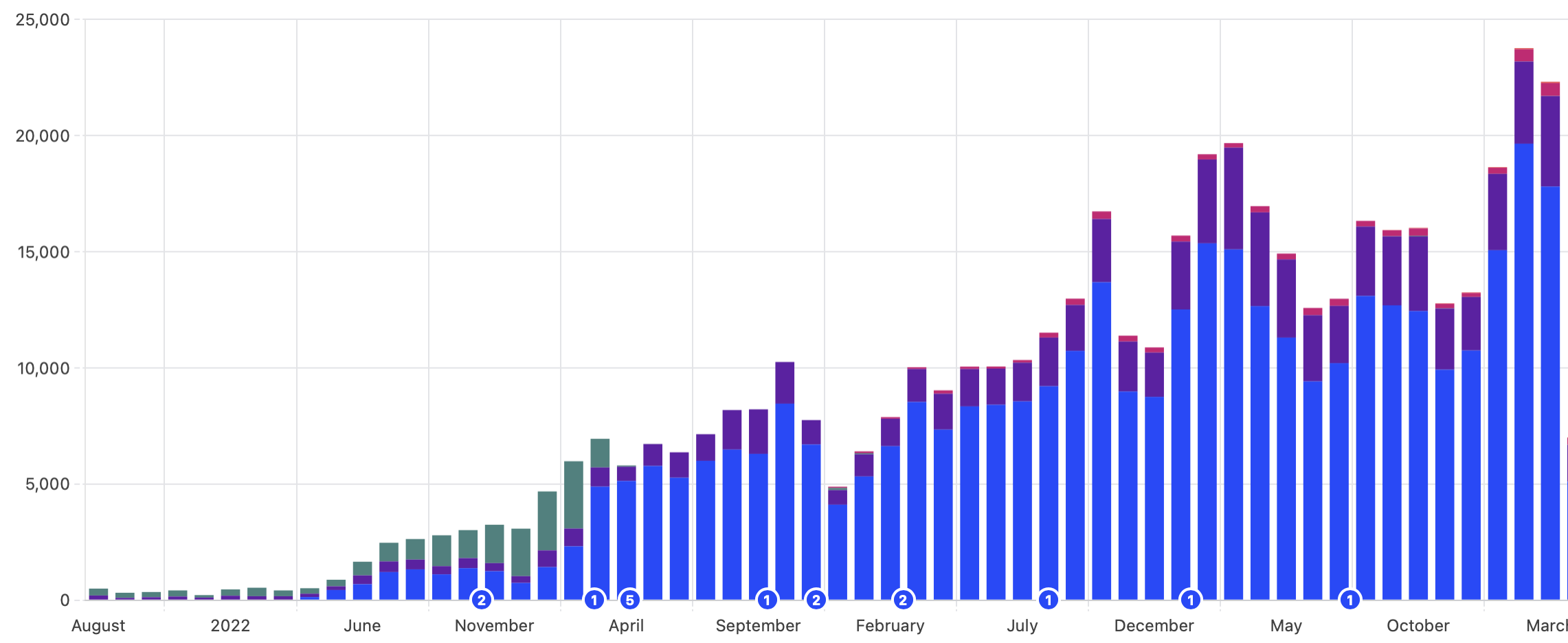
When I joined SellerCrowd in July 2021, the business had been flat for a while. Flat community. Flat revenue. Flat contributions. My job wasn't to make the product prettier. It was to work with Clay and the leadership team to diagnose the actual unlock, then ship the thing that would move the business.
We landed on the answer together: grow the value of the data. Everything else, community, revenue, retention, would follow from that. The rest of this case study is how we did it.
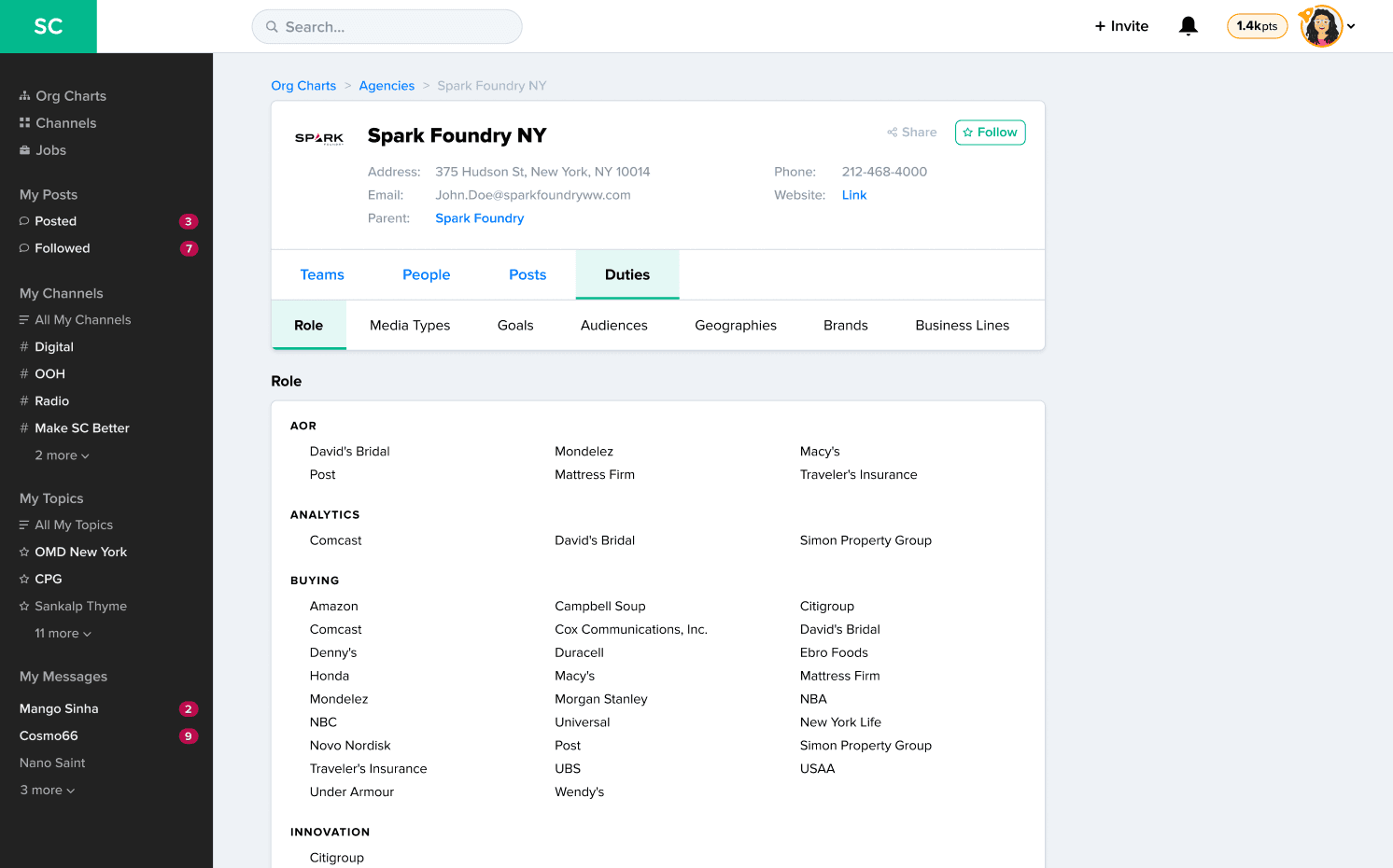
Spark Foundry NY · 2021
Spark Foundry NY · 2026
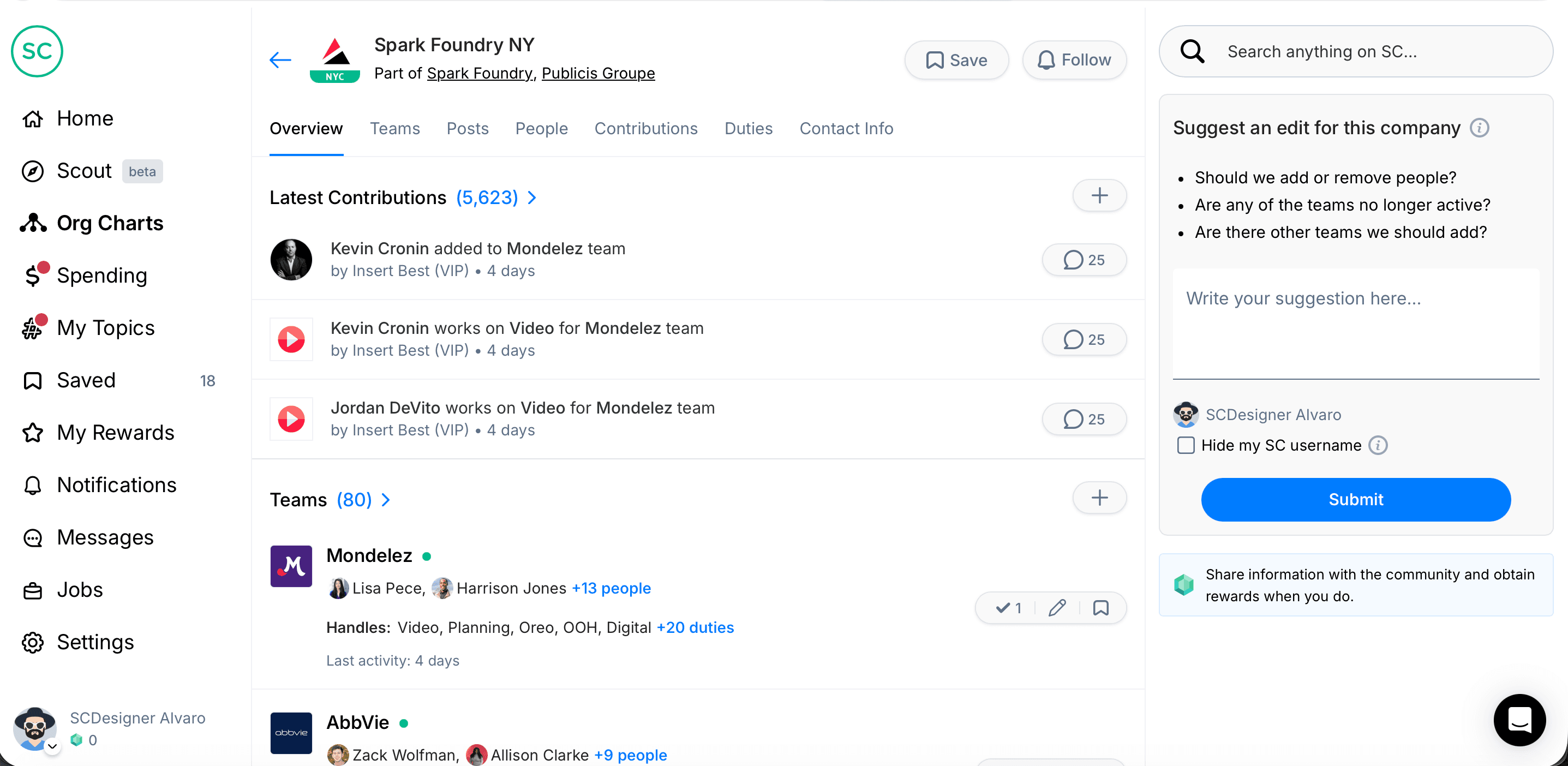
The same agency page, five years apart. Every piece of intel on the right in 2026 was contributed by a member of the community.
What SellerCrowd actually is
SellerCrowd is the largest media-sales community in the US, but that framing hides what it is as a product. SellerCrowd is a 100% community-contributed database of prospects and intel. Every useful piece of information on the site was posted by a seller, for other sellers. The community is the surface. The data is the product. The data is what people pay for.
That shape means the most important metric in the business is not sign-ups, not active users, not session time. It's contributions. If contributions grow, data quality grows. If data quality grows, pricing power grows. If pricing power grows, we can keep giving SellerCrowd to contributors for free, which is the deepest incentive to contribute. Every growth lever in this business sits on one upstream metric.
So the question became simple. Why had contributions stalled, and what would it take to move them?
Why contributions had stalled
Contributions in 2021 were posted through forms. Each piece of intel had its own form, buried inside a specific page on the product. You had to land on the right page, find the form, fill it out, submit it. Once you did, your contribution lived on that page and nowhere else. Nobody saw it. Nobody thanked you for it. The next seller looking for the same intel might find it, but you, the contributor, got no sign that you'd added anything to the site.
Three problems stacked on top of each other.
Discoverability. Forms sat on the pages the contributions would end up on, not on the pages where sellers were already spending their time.
Friction. Forms ask specific questions. Sellers wanted to speak the way they actually speak, not answer a dropdown.
Invisibility. A contribution that disappears into a page is a contribution that doesn't feel like a contribution. No social signal. No status. No reason to do it a second time.
The fix was going to need all three at once. Change where sellers contribute. Change how. Change what happens after.
Foundation first (Jul 2021 to Jan 2022)
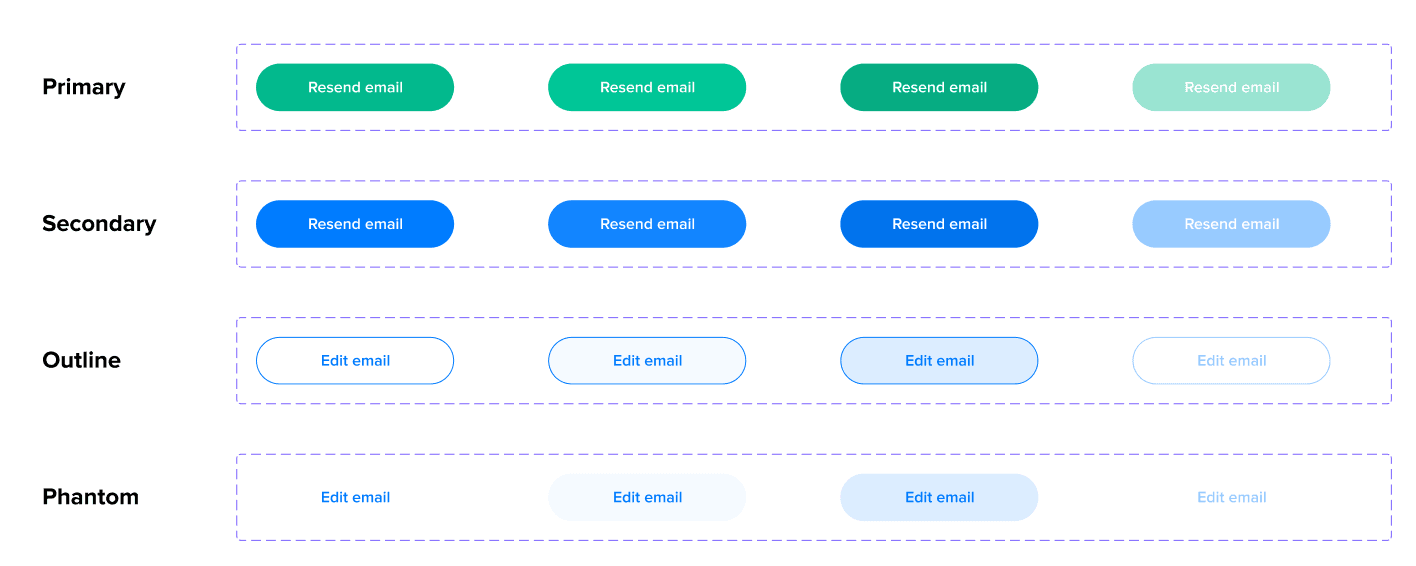
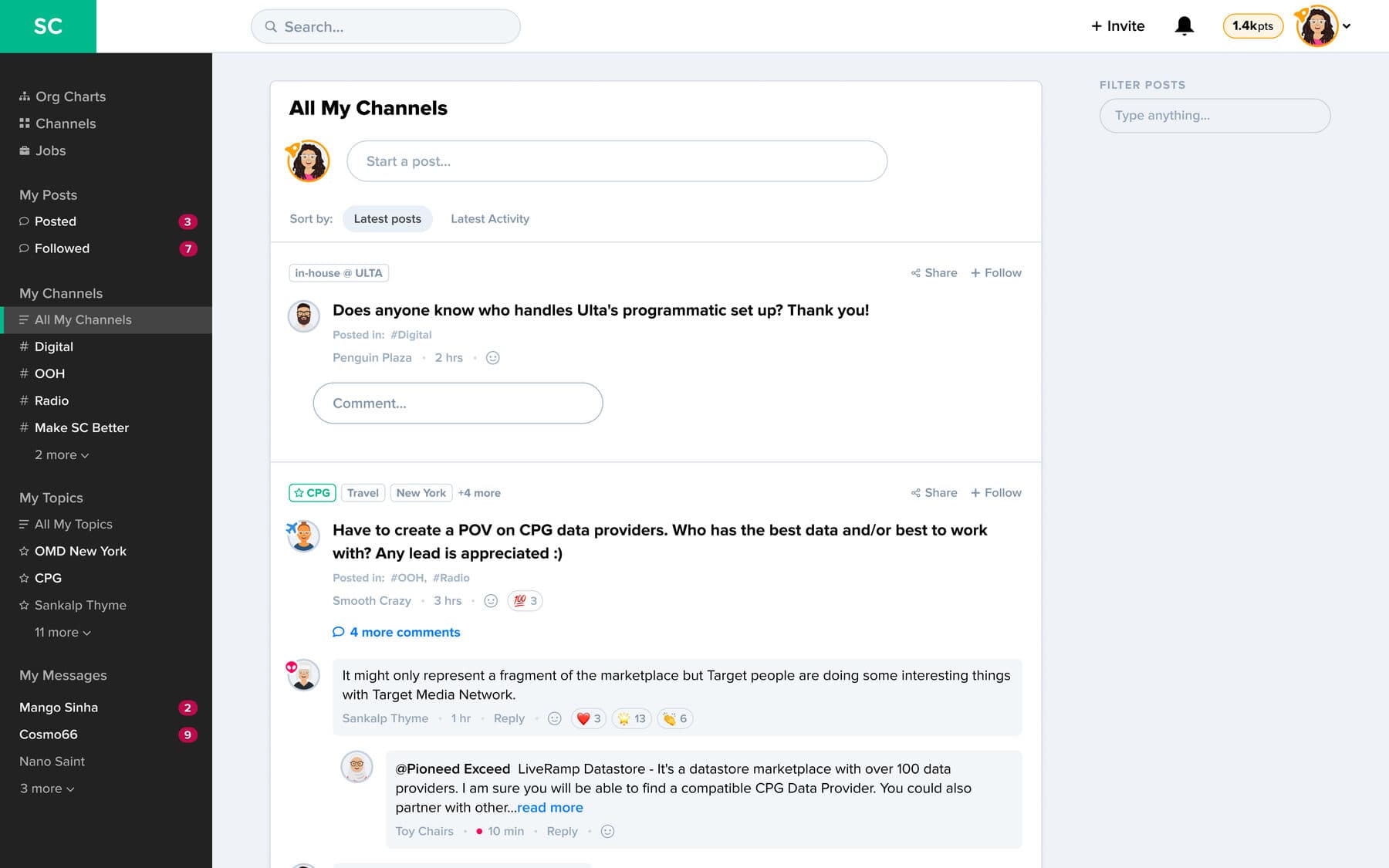
In the first six months we built something unsexy: a real design system. Tokens, components, patterns, documentation. A working foundation engineering could reach for without asking what colour something should be.
We did this first because the next two years were going to ask us to ship fast and ship often. Every hour spent on the system upfront was an hour the team saved downstream. By January 2022 we had a foundation that could keep up with the pace of decisions. That turned out to matter a lot.
July 2021
January 2022
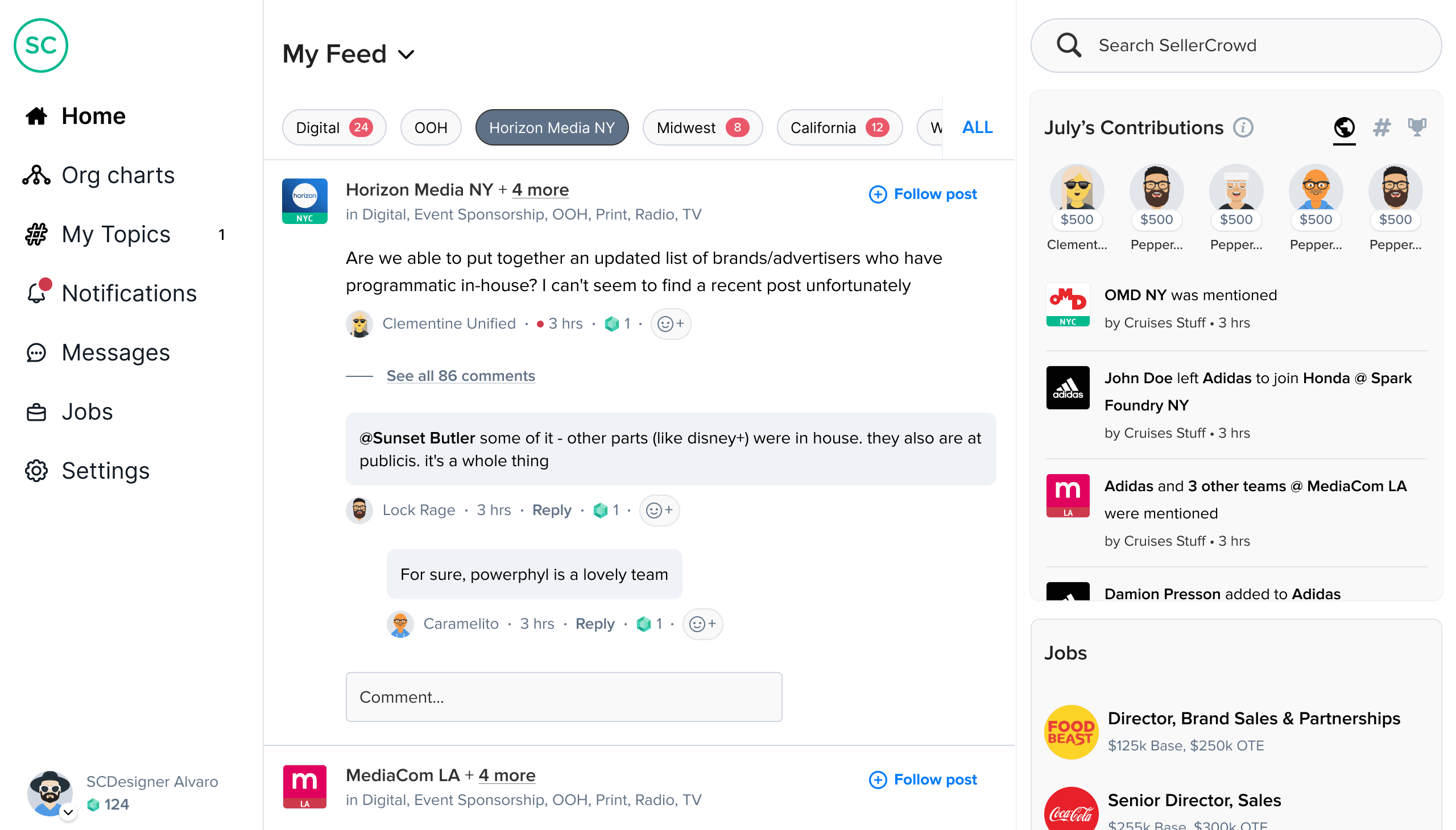
Six months of foundation work. No visibility moves yet. Just a product that could carry them.
Thread one · Visibility
Making contributions visible
The moves in this section came out of a set of workshops I led in Barcelona in 2021. We met to commit, as a team, to what the contribution problem actually was. Two things came out of the room: contributions had no visibility on the site, and the form-based model had to go. Workshops that end in “let's keep thinking” are cheap. This one ended with a plan, and the plan is what shipped through 2022.
Three moves landed across that year.
First, forms became open fields. Instead of a structured form per page, contributors got a simple text area and could post whatever they wanted. Whatever shape the intel took, sellers could put it into the product the way they'd say it over Slack. CTAs landed across the relevant pages of the product so sellers could drop intel from wherever they were, not just from the page where it would end up.
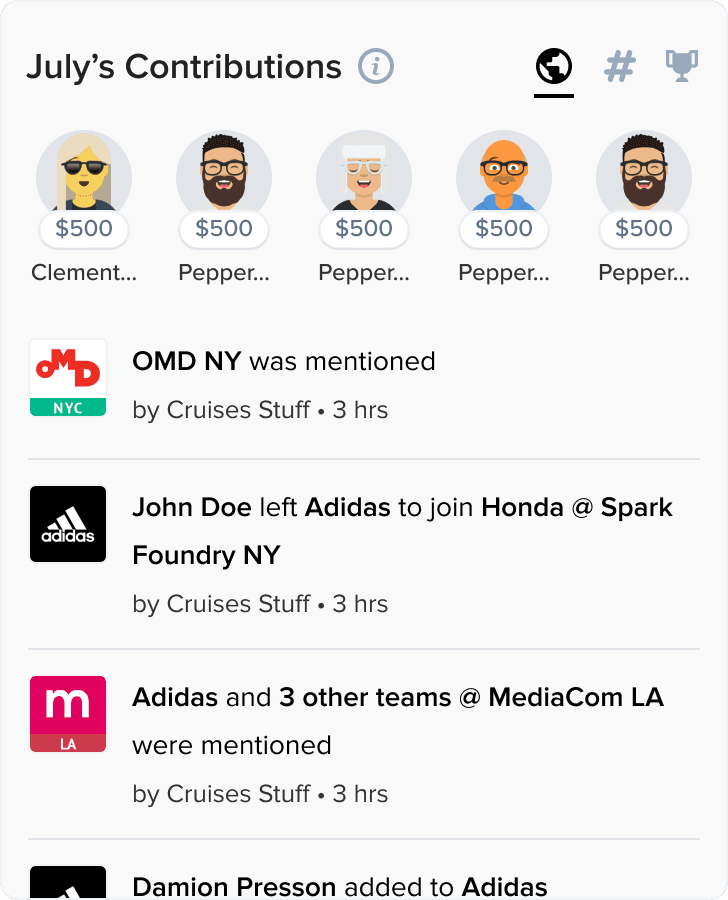
Second, contributions got visible. We built a module on the feed's right rail called NIOC (New in Org Charts) and placed it front and centre. NIOC runs on a monthly cadence. Every month resets, so every month gives contributors a fresh race to run. A leaderboard sits inside the module ranking the top contributors by gems earned that month. Your post shows up where your peers see it. Contribution turns into status.
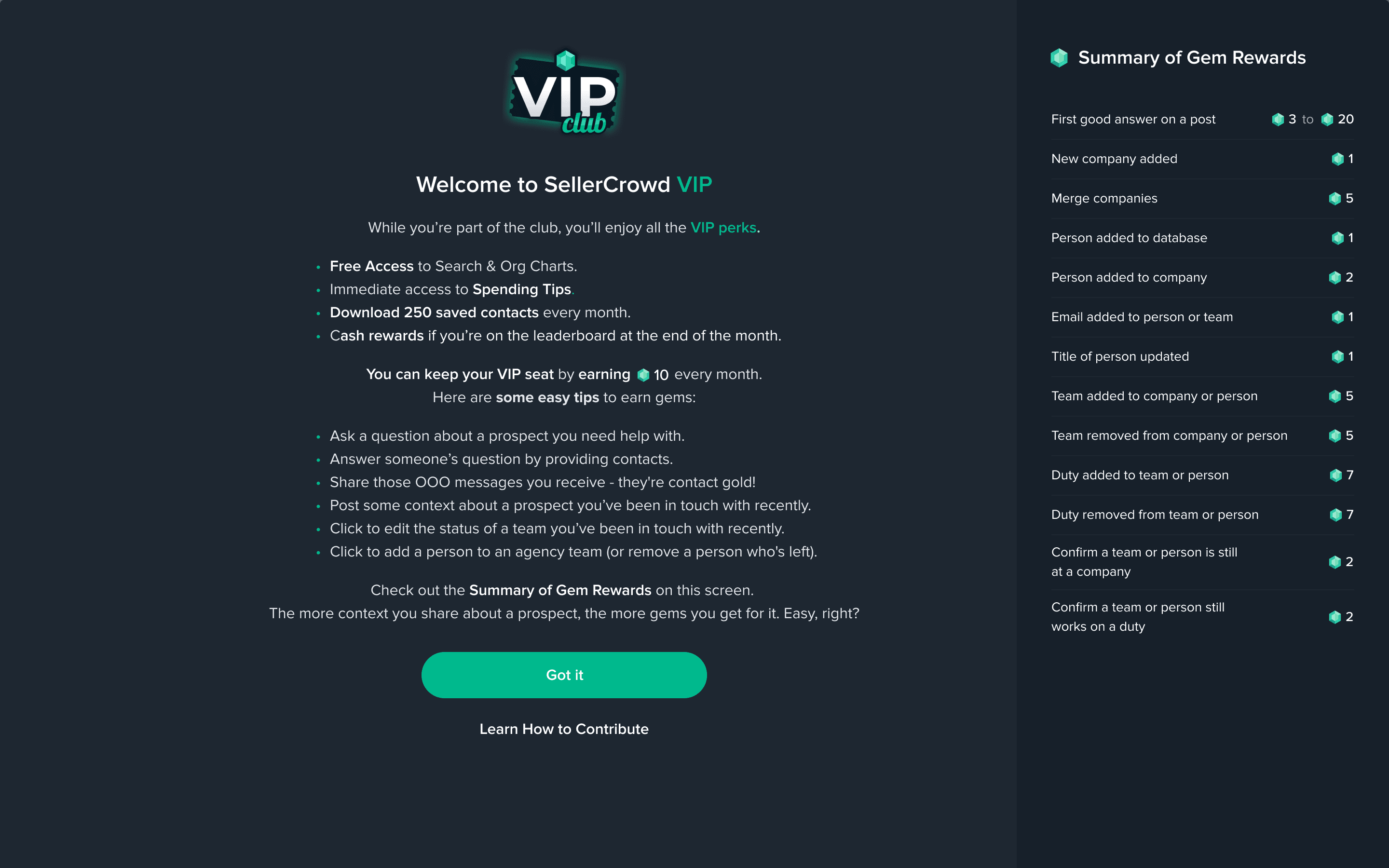
Third, gems and VIPs. Gems are a virtual currency earned for every meaningful contribution. We gave them an icon in SellerCrowd's colours so they sat naturally in the UI. Once a seller earned 10 gems in a month, they became a VIP, and VIPs got SellerCrowd for free.
The VIP mechanism came with a month-long email campaign. The invite when you first qualified. A halfway-through-the-month reminder if you were falling behind. A sharper nudge with a week left. A last-two-days push. A “way to go” confirmation when you hit it, or a “you lost your VIP seat” note when you didn't, always with a clear path back. That sequence was the first real behavioural signal the site had noticed you. The prize wasn't the gems. The prize was the access. Gems were how you tracked your way to it.


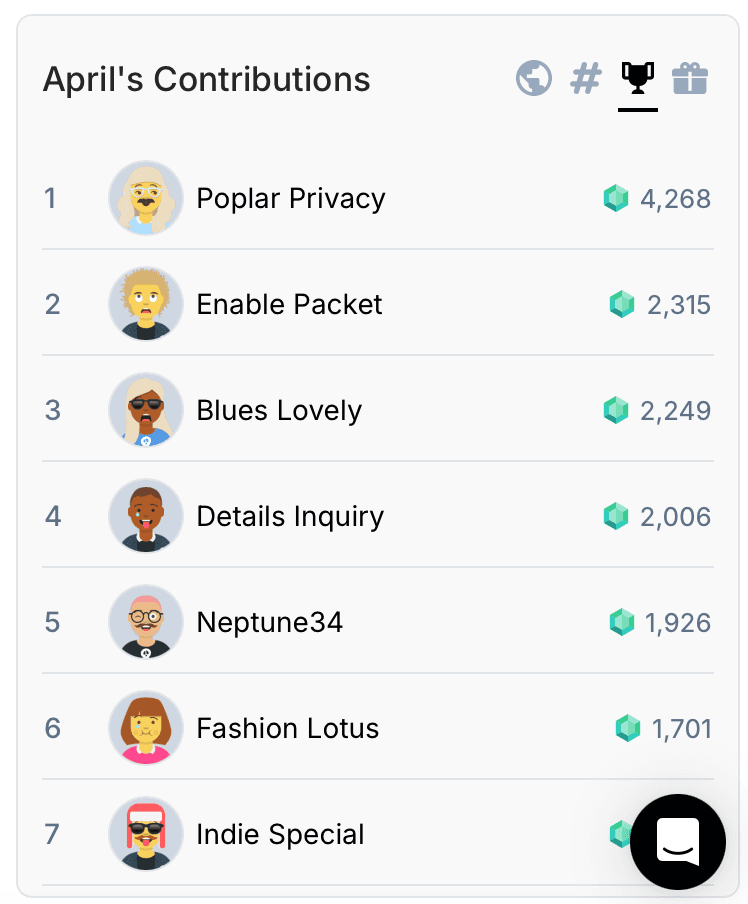
The logic underneath all three moves was the same: sellers will contribute if the site tells them it noticed.
Thread two · Behaviour into data
When people gamed it
With the new contribution paths live, volume went up. So did a new problem: low-context posts. People started dropping bare emails, a name on its own, a title without a company, all claiming credit for the gems attached. The system was rewarding quantity without noticing quality.

I proposed reworking the gem economy around insight depth: the deeper the insight, the more gems. A contact name on its own earned a small reward. Context about the role, the patch, the buying pattern earned more. A full intel write-up earned the most.
We wrote this into a set of Contribution Guidelines, published them to the community, and rebuilt the gem payouts underneath. Those guidelines are still the document we point new contributors to when they ask “is this the right kind of post?”
The abuse dropped. Quality went up. The contributors we actually wanted kept their rewards. Bare-email spammers stopped bothering.
The first price move, and the rewards that came with it
By 2023, the data had grown. Sellers were signalling they'd pay more for what we'd built. Three things went live together: the depth-weighted gem economy from the previous section, our first monthly price increase, and a new monetary reward layer on the leaderboard.
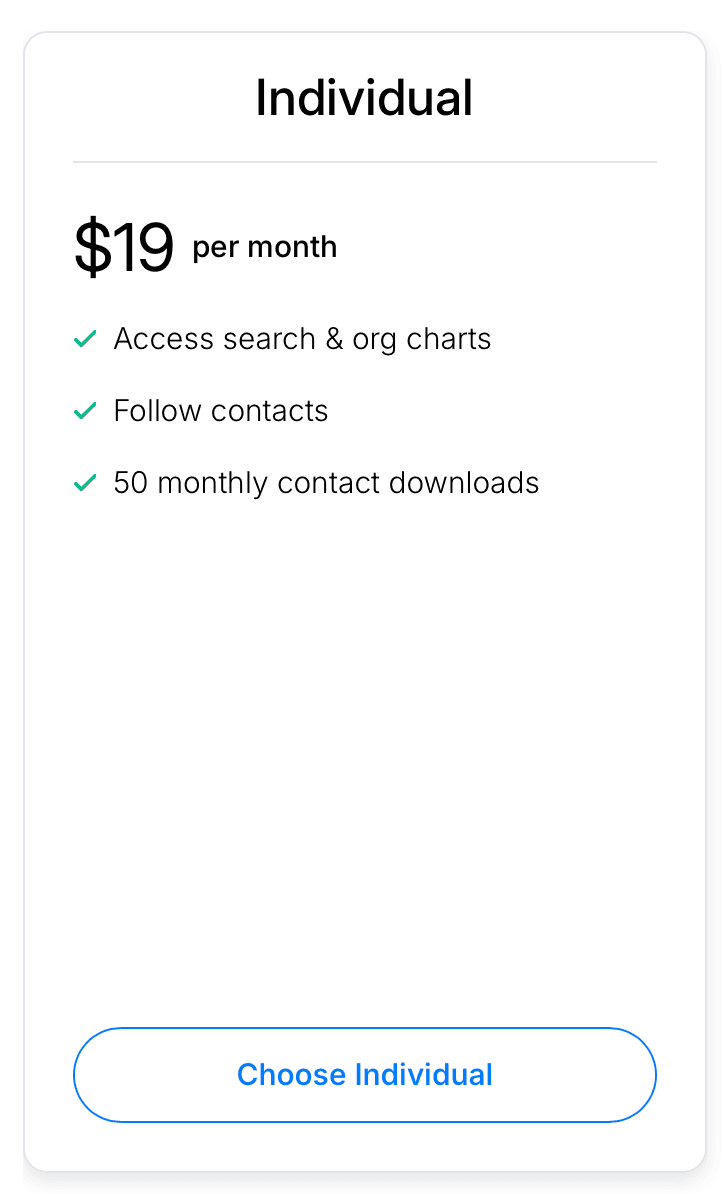
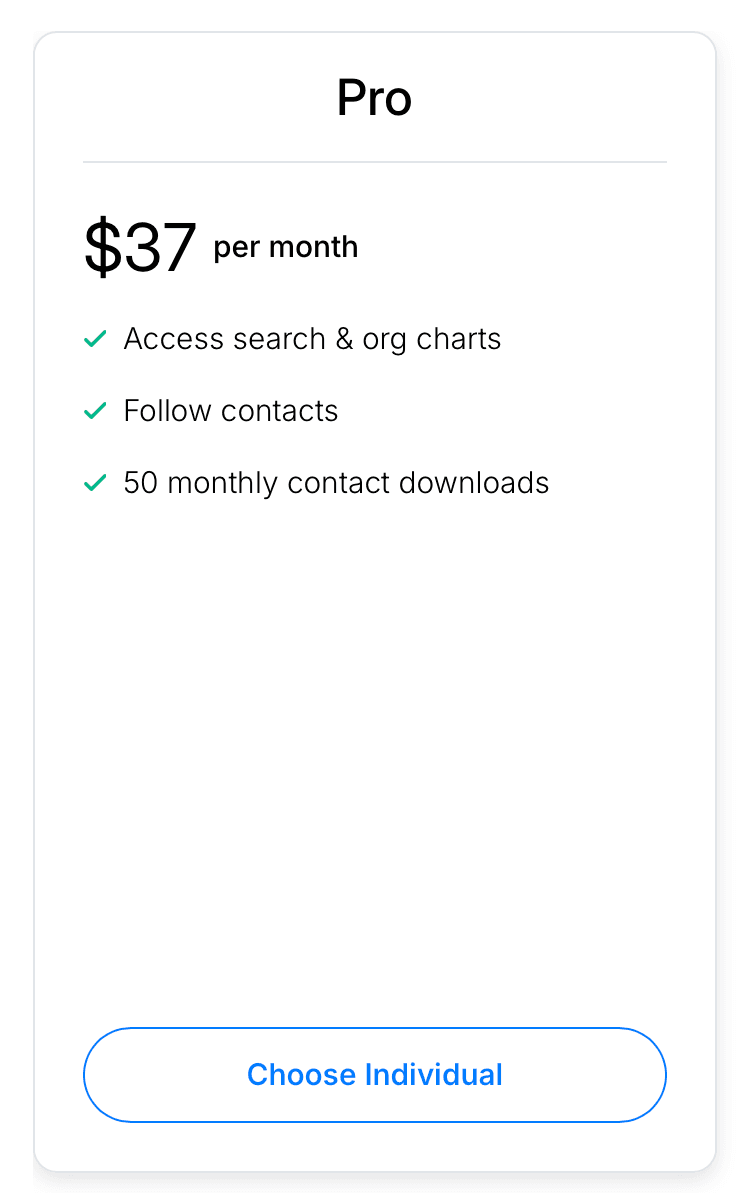
We raised monthly pricing for the first time since I'd joined, from $19 to $37. We also renamed the plan from Individual to Pro. The new name matched the new price, and it matched the product. Community members weren't “individuals” who happened to subscribe. They were professionals whose job was easier with this tool.
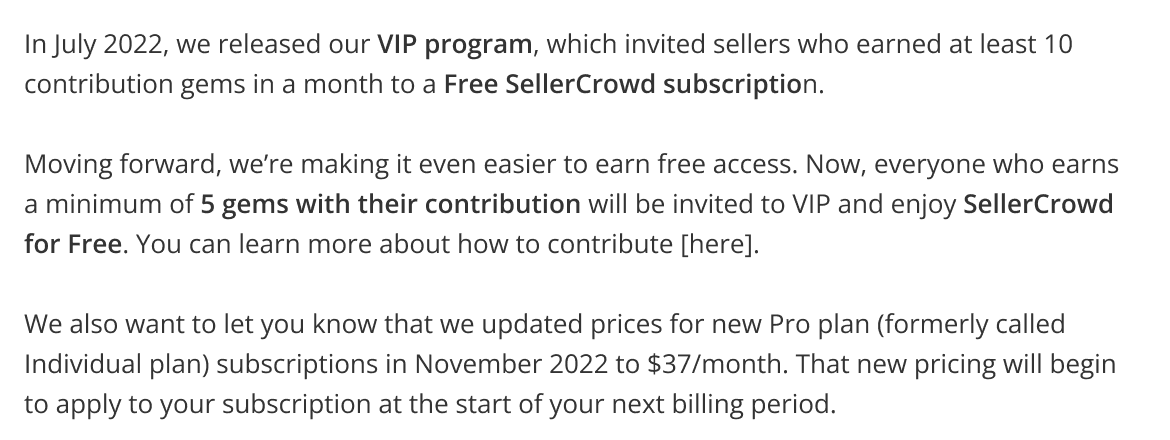
At the same beat, we added monetary rewards on top of the VIP mechanism. The top contributors on the leaderboard would get paid every month in actual cash, not gems. We emailed the community to say why: part of the proceeds from the price increase was going straight back to the people keeping this product alive.
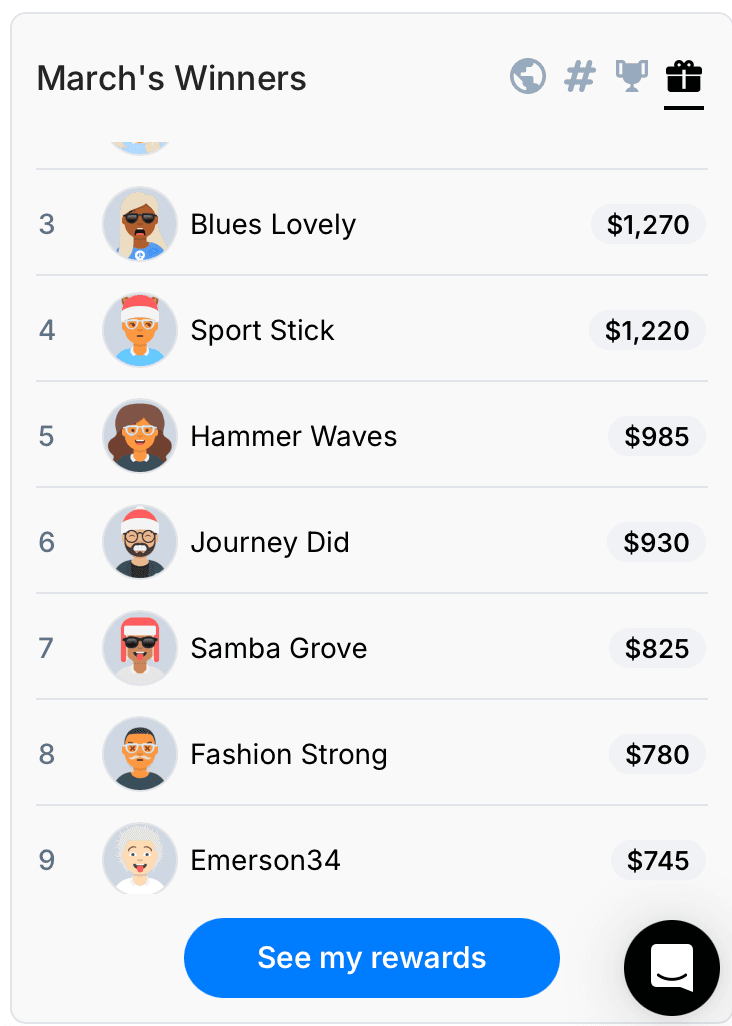
That timing was deliberate. Sellers saw the price go up. Sellers saw the site pay its best contributors. Contributions jumped, and so did revenue. The “price goes up, people leave” reflex most pricing work has to defend against never showed up. The site had gotten more valuable, and we'd made it visible that contributors were the ones who'd built that value.
Per-seat enterprise pricing
Alongside the monthly price increase, I proposed dropping the flat-rate enterprise model. A team of 20 and a team of 200 had been paying on roughly the same deal, which left real money on the table. We moved enterprise to per-seat.
It was easy to explain to customers because it was fairer. Bigger teams pay for more seats. It played cleanly with the new monthly price, too. Enterprise revenue grew as a function of headcount inside each customer, which meant expansion inside existing accounts became a lever we hadn't really had before.
One-click contributions
With contributions already climbing, we had an obvious next move: reduce friction on the high-frequency post types. Certain events happen a lot in this community. “Person left the team.” “Team moved to a different agency.” “Person joined a new agency.” All of those used to be free-text posts, which meant the seller still had to phrase the intel even when it was a simple factual change.
We built one-click actions for each of the common patterns. Tap the action, confirm the details, the post is live. The contribution still earned gems. The leaderboard still counted it. But the work of contributing dropped from “write a sentence” to “tap a button.”
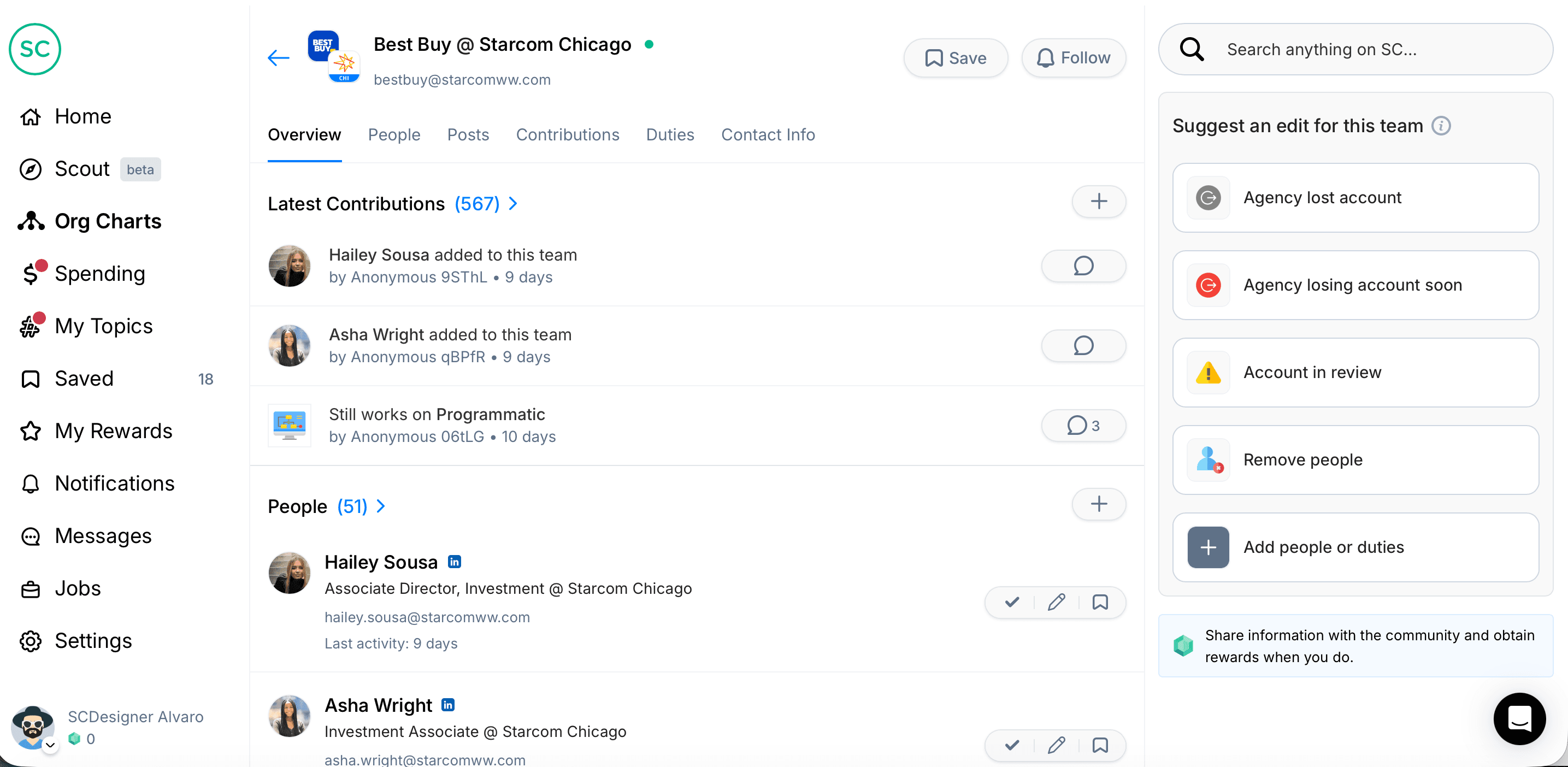
- Tap the action
- Confirm the details
- Posted. Gems awarded.
Contributions tripled.
Thread three · Let the data pull the price
The $47 call, and what 2025 confirmed
Heading into 2024, contributions had grown 2.5× since the first price move. My position going into the conversation was straightforward: match the price to the value of the data, go to $67 a month, hold there through 2025 to give users space. Clay wanted to be more conservative. We landed on $47.
At the same time we introduced a Plus tier at $137, unlocking advantages built for heavier users. Access to spending conversations was the biggest one. Plus gave us an upside lever without asking every existing user to absorb a bigger jump all at once.
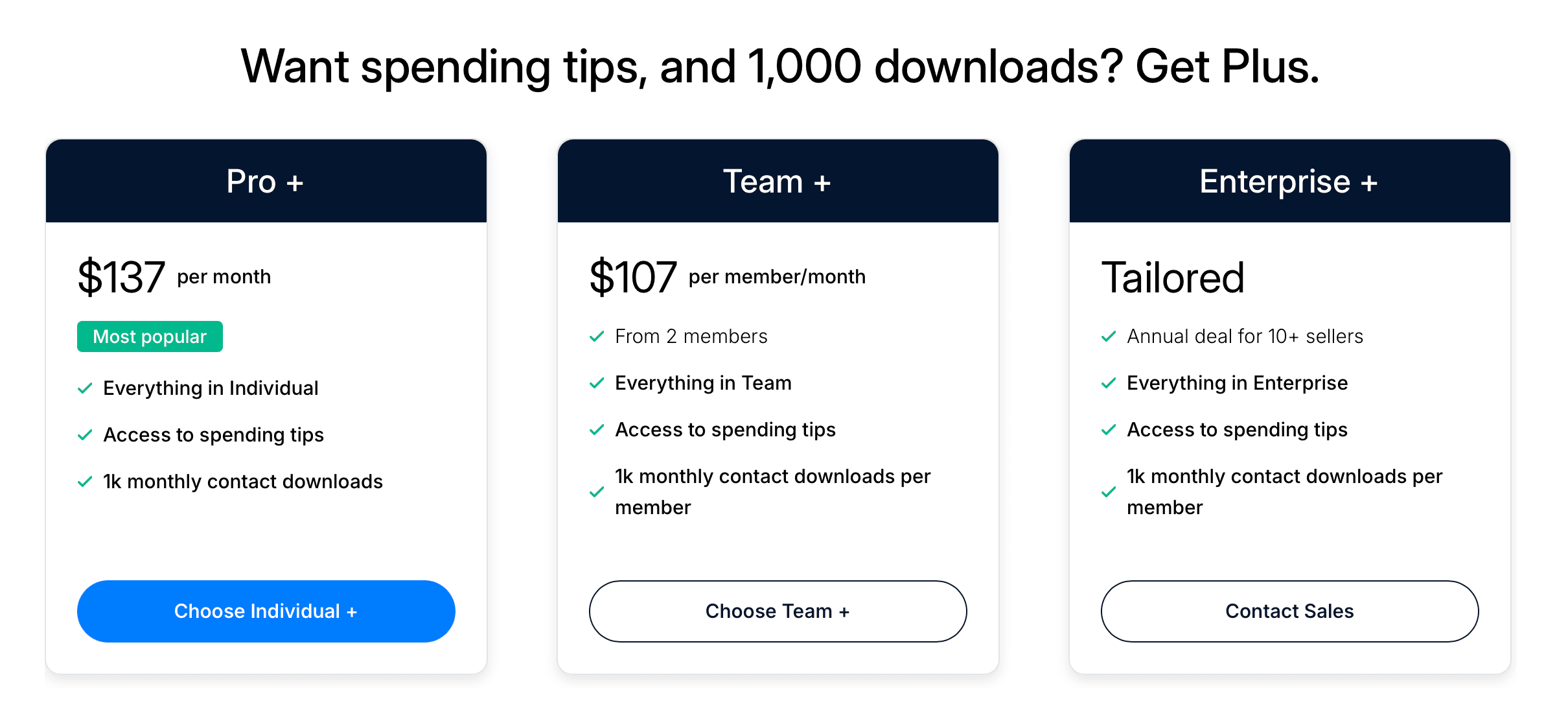
2025 turned out to be the A/B test we hadn't planned on running. We raised the standard plan from $47 to $67, the same number I'd argued for a year earlier, and no complaints came back. Nobody cancelled over it. Nobody pushed back.
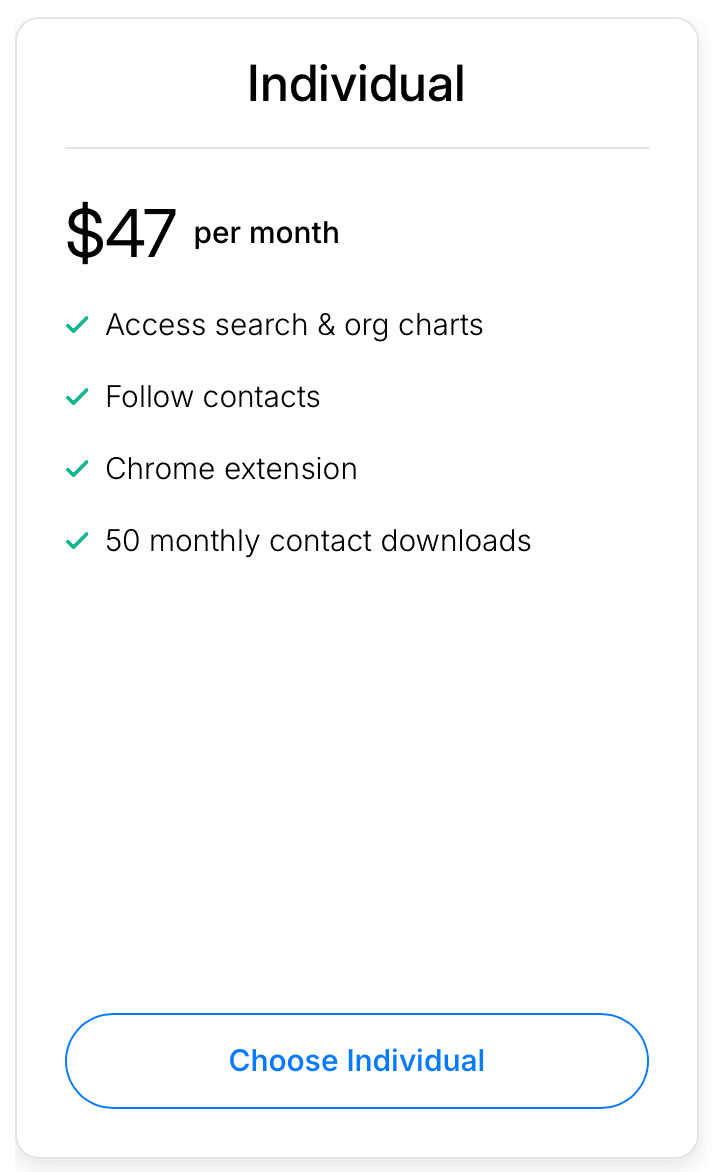
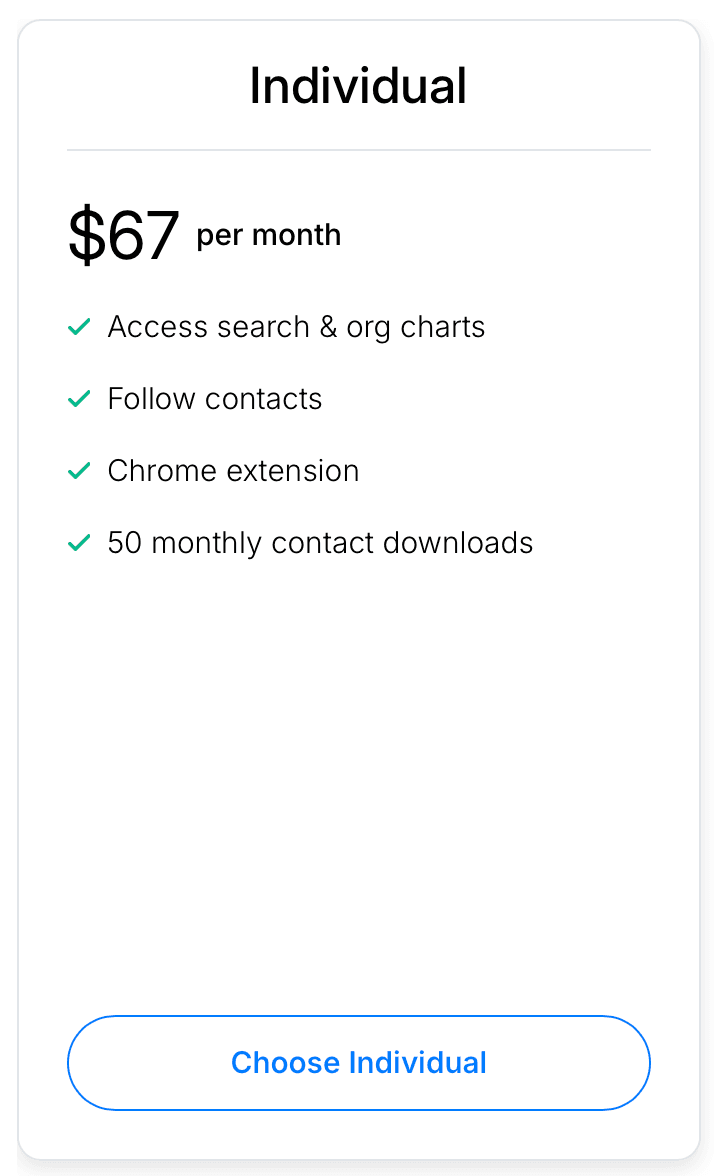
Roughly a million dollars of cash the business didn't collect in 2024. I'm telling you about it because it's the honest lesson in this story, not the victory lap. The right price argument still has to land inside the team's conviction, and in 2024 we chose the safer number together. What 2025 taught us is that when the flywheel is running and the data's telling you the market has room, caution is quietly the more expensive call.
What this says about how I work
Five years of decisions, but the shape of the work is consistent. Three threads worth pulling out.
Design as business diagnosis. The SellerCrowd brief never said “redesign the contribution form.” It said “we're flat.” Getting from flat to 3× MRR meant diagnosing what the product actually was (data, not community) and designing the engine that made the data come in. Visual design was a commodity. The differentiator was choosing which design, why, and what it was supposed to move.
Behavioural design, never gamification. I don't use the word gamification. The VIP loop, the leaderboard, and the gem economy aren't points-and-badges layered on top of a product. They're the mechanism the product uses to translate user behaviour into data the business can sell. That's a structural claim, not a cosmetic one.
Workshops that end in commitments. The Barcelona 2021 workshops weren't the only time. We ran this play several times across the five years. Everyone in the same room, diagnose honestly, pick the priorities, leave with a plan that actually ships. Workshops that end in moodboards are cheap. Workshops that end in shipping dates are what move the business.